
Integrating a customer portal with your LIMS is one of the highest-leverage operational decisions a lab can make. The benefits of LIMS with portal integrations span every layer of lab operations: clients get real-time visibility into their samples and reports, staff spend less time answering status calls, and compliance documentation builds itself in the background. Here is what that looks like in practice:
- Client self-service: Providers and patients access sample status, reports, and Certificates of Analysis without contacting the lab.
- Faster turnaround perception: Real-time tracking eliminates the dead time between testing and client notification, reducing data review cycles by 40%–60%.
- Automated compliance: Audit trails, electronic signatures, and access logs generate continuously, not just before an inspection.
- Reduced administrative load: Fewer inbound emails and calls free lab staff for higher-value work.
- Client retention: Transparent, on-demand access builds the kind of trust that drives repeat business and referrals.
Labrynix builds this model directly into its platform. Labrynix Portal gives providers and patients branded, secure access to orders, statuses, and reports, while Labrynix Connect handles the HL7, FHIR, and API pathways that keep everything synchronized.
Table of Contents
- What is a LIMS customer portal?
- Key benefits of integrating customer portals with LIMS
- Compliance and operational efficiency through portal integration
- Implementation considerations for LIMS portals
- What successful LIMS and portal integration looks like in practice
- How integrated analytics sharpen lab decision-making
- Labrynix gives genetic and molecular labs a connected operating system
- Key Takeaways
What is a LIMS customer portal?
A LIMS customer portal is a secure, web-based interface that connects a lab's internal LIMS to its external stakeholders: ordering providers, patients, contract clients, or institutional partners. Think of it as the client-facing layer of your lab's operating system.
At the functional level, the portal pulls live data from the core LIMS and presents it in a format that non-lab users can actually navigate. A provider logs in and sees which samples are in accessioning, which are in analysis, and which reports are ready to download. A patient sees their result and a plain-language summary. Neither of them needs to call the lab to find out.
Role-based permissions control what each user type sees. Lab staff might have full workflow visibility; a client sees only their own orders; an auditor gets read-only access to logs and signed documents. Secure document delivery of Certificates of Analysis and final reports happens through encrypted channels, with every download timestamped and logged. That is fundamentally different from emailing a PDF attachment and hoping it lands in the right inbox.
The distinction between a portal and a standalone client system matters. A standalone system requires manual data entry on both sides. A true LIMS portal integration means the data flows automatically: when a result is validated in the LIMS, the report appears in the portal. No copy-paste, no re-keying, no version confusion.
Key benefits of integrating customer portals with LIMS
The advantages of LIMS integration with a customer portal are not abstract. Each one maps to a specific operational problem labs deal with every week.
1. Customer self-service cuts inquiry volume
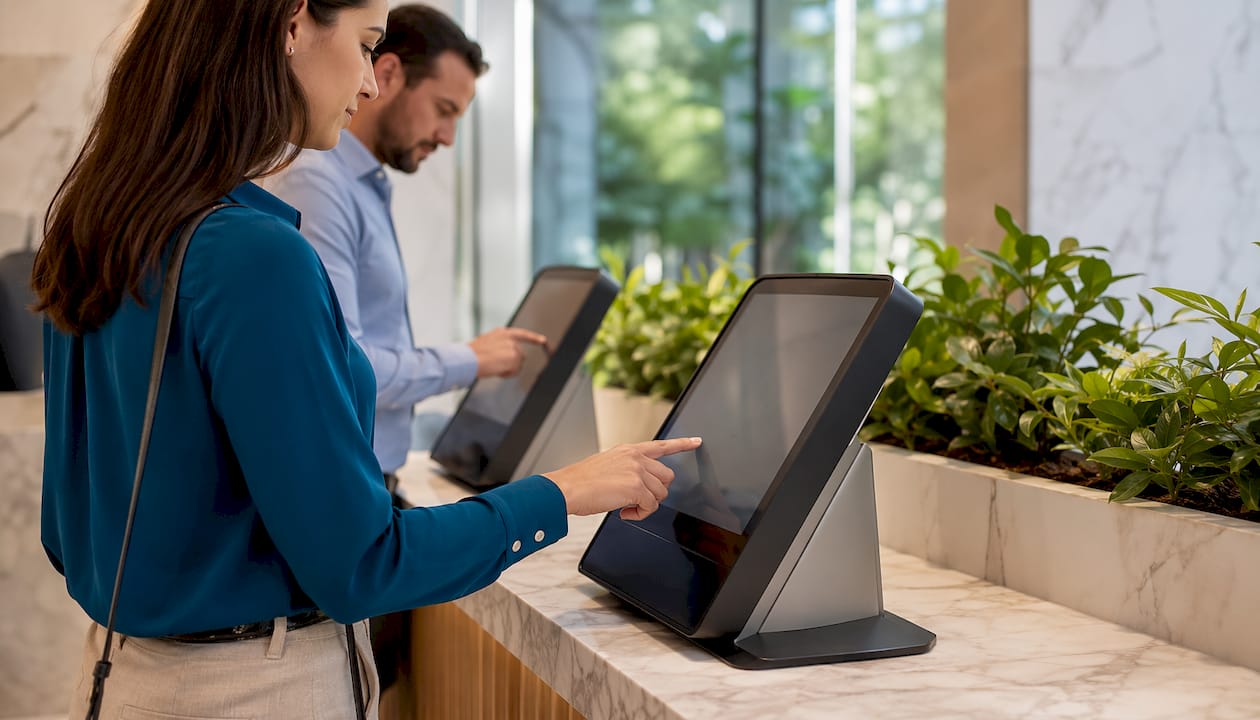
When clients can check sample status themselves, the volume of "where are my results?" calls and emails drops sharply. Labs that deploy integrated LIMS portals report that clients expect 24/7 transparent access, the same standard they hold online banking and package tracking to. Meeting that expectation reduces inquiry volume and shortens sales cycles because prospects can see the lab's responsiveness before they even sign a contract.
2. Real-time report access speeds client decisions
A provider waiting on a pharmacogenomics result to finalize a treatment plan cannot afford a 48-hour email lag. Portal delivery means the report is available the moment it clears lab review. That immediacy matters in precision medicine, where LIMS patient data management directly affects clinical timelines.
3. Communication becomes structured, not reactive
Without a portal, lab-client communication is a patchwork of emails, phone calls, and faxes. A portal centralizes it. Automated notifications tell clients when a sample is received, when testing begins, and when a report is ready. The lab does not chase anyone, and the client does not chase the lab.
4. Workflow automation reduces manual errors
Labs that deploy integrated LIMS and portal solutions reduce manual entry errors by over 70% and cut document retrieval time by half. When data flows from instrument to LIMS to portal without a human re-entering it at each step, the error surface shrinks dramatically.
5. Compliance documentation builds continuously
Audit trails, access logs, and electronic signatures accumulate in real time rather than being assembled under deadline pressure before an inspection. This is the difference between compliance as a workflow and compliance as a fire drill.

6. Client engagement and loyalty improve measurably
Transparency is a retention tool. When clients can see exactly what is happening with their samples, they trust the lab more. That trust translates into repeat business and referrals, which matters especially for reference labs and contract testing operations competing on service quality as much as price.
7. Scalability without proportional headcount growth
Portal integrations offer scalability that lets labs move from a handful of clients to a multi-site network without adding a corresponding number of client services staff. Access levels, report formats, and notification rules can be customized per client or client group.
8. Data integrity across the full sample lifecycle
Because the portal draws directly from the LIMS, there is a single source of truth. No discrepancies between what the lab's system shows and what the client's portal shows. That integrity matters for chain-of-custody documentation and for any downstream regulatory review.
9. Faster audit preparation
Pharmaceutical labs benefit from centralizing audit trails through integrated portals, reducing inspection preparation time from weeks to days. Every access event, every report download, every status change is logged with a timestamp and a user ID.
10. Competitive differentiation
A lab that offers a polished, branded portal signals operational maturity. For genetic testing and molecular diagnostics labs competing for provider relationships, that signal carries weight during the sales process.
Compliance and operational efficiency through portal integration
Compliance in a modern lab is not a quarterly review. It is a continuous workflow, and portal integration is one of the most effective ways to make it so.
Modern LIMS platforms embed regulatory requirements for electronic records and signatures directly into routine workflows. FDA 21 CFR Part 11 and ISO 17025 both require that electronic records be attributable, legible, contemporaneous, original, and accurate. A portal that logs every client interaction, every document access, and every signature satisfies those requirements automatically, without a separate compliance step.
Labs that deploy integrated solutions decrease audit findings and reduce inspection risk because the documentation is already there, already organized, and already timestamped. The alternative, assembling paper trails after the fact, is where labs run into Form 483 observations and warning letters.
LIMS compliance workflows also reduce the operational disruption that comes with inspections. When an auditor asks for all access events related to a specific sample batch, the answer takes minutes, not days.
Labrynix is built with HIPAA-conscious and GDPR-conscious workflow principles throughout: role-based access, configurable permissions, audit logs, and secure report delivery are not add-ons. They are part of the core architecture.
Pro Tip: Map your compliance requirements to specific portal features before you go live. Know exactly which 21 CFR Part 11 or ISO 17025 controls each portal function satisfies, and document that mapping. It becomes your first exhibit during an inspection.
Implementation considerations for LIMS portals
Deploying a LIMS portal is a project with real technical and organizational complexity. The labs that get it right tend to share a few common practices.
Security and data privacy come first. HIPAA and GDPR requirements shape every design decision: encryption in transit and at rest, session timeouts, multi-factor authentication, and granular role management. These are not optional features to add later.
Define mandatory data fields before launch. Predefining essential data points prevents clients from submitting incomplete or irrelevant information that clutters the LIMS and breaks downstream workflows. Every field in the client-facing intake form should map to a validated field in the core system.
Plan for user training on both sides. Lab staff need to understand how portal actions affect LIMS workflows. Clients need enough onboarding to actually use the portal rather than defaulting back to email. Short video walkthroughs and a simple FAQ page reduce support burden significantly.
Access role management is ongoing, not a one-time setup. Staff leave, clients add new contacts, and regulatory requirements change. Build a process for reviewing and updating roles on a defined schedule.
- Conduct a phased rollout: start with one client group or one report type before opening the portal to all clients.
- Validate data flows end-to-end in a test environment before go-live.
- Set up automated alerts for failed integrations or data sync errors.
- Establish a feedback loop with early adopters to catch usability issues quickly.
Pro Tip: Run a parallel period where both the old communication method and the new portal are active for your first client cohort. It gives you real usage data and catches integration gaps before they affect your full client base.
What successful LIMS and portal integration looks like in practice
The pattern across successful implementations is consistent: labs that treat the portal as a core operational tool rather than a client convenience feature get the most out of it.
A molecular diagnostics lab handling high-volume pharmacogenomics testing for multiple provider networks used portal integration to eliminate the manual report distribution step entirely. Reports cleared lab review and appeared in the provider portal automatically, with a notification sent to the ordering provider. Turnaround time from result validation to provider access dropped from hours to minutes. The lab's client services team, previously spending a significant portion of their day answering status inquiries, shifted that time to onboarding new provider accounts.
A reference lab running stability testing for contract pharmaceutical clients used the portal's audit trail features to prepare for an FDA inspection. Instead of pulling records from multiple systems and email archives, the compliance team exported a complete access log from the portal in under an hour. The inspection went smoothly, and the lab used the experience to formalize its portal-based compliance documentation as a standard operating procedure.
Clinical labs integrating portals with diagnostic workflows have seen similar gains in operational efficiency, particularly in reducing the administrative overhead of result communication and follow-up.
The common thread: integration success depends on treating the portal as part of the LIMS, not a separate system bolted on afterward.
How integrated analytics sharpen lab decision-making
A portal that only delivers reports is useful. A portal connected to analytics is a management tool.
When the portal feeds usage and operational data back into a centralized analytics layer, lab managers gain visibility they simply cannot get from a standalone LIMS. Which clients are downloading reports within an hour of notification? Which sample types are consistently hitting turnaround time targets, and which are not? Where are the bottlenecks in the review queue?
Labrynix Intelligence addresses exactly this gap. It adds AI-powered insights and workflow automation on top of the connected LIMS and portal data: bottleneck detection, review queue management, and lab performance visibility that updates in real time rather than appearing in a monthly report.
For IT professionals managing multi-location lab networks, this kind of integrated analytics layer is the difference between reactive troubleshooting and proactive capacity planning. When you can see that a specific workflow step is adding two hours to turnaround time across a subset of orders, you can fix it before it becomes a client complaint. LIMS workflow design built around this feedback loop produces measurably better operational outcomes over time.
The data also supports client conversations. A lab that can show a provider dashboard with SLA adherence rates and average turnaround times by test type is having a fundamentally different business conversation than one that can only offer anecdotal reassurance.
Labrynix gives genetic and molecular labs a connected operating system
Labs running genetic testing, pharmacogenomics, or molecular diagnostics face a specific problem: generic LIMS platforms were not built for their workflows. PGx report generation, CPIC guideline support, PharmGKB-informed annotations, and provider-facing result delivery require a system that understands the science, not just the sample lifecycle.
Labrynix was built from real genetic and molecular laboratory experience. The platform connects LIMS workflow management, advanced PGx reporting, provider and patient portals, billing visibility, and AI-powered analytics into one system. Labrynix Portal gives providers and patients secure, branded access to orders, statuses, and reports. Labrynix Connect handles HL7, FHIR, API, and webhook integrations with EMR, EHR, and billing platforms. Every layer is built with HIPAA-conscious and GDPR-conscious principles: role-based access, audit logs, configurable permissions, and secure report delivery throughout.
For labs ready to move beyond disconnected tools and manual handoffs, Labrynix solutions are available for genetic testing labs, molecular diagnostic labs, reference labs, and multi-location networks. See what the platform covers and request a walkthrough at labrynix.com.
Key Takeaways
Integrating a customer portal with your LIMS is the single most effective way to simultaneously improve client transparency, reduce administrative burden, and build compliance documentation into daily operations.
| Point | Details |
|---|---|
| Workflow efficiency gains | Integrated LIMS portals reduce data review cycles by 40% to 60% through real-time tracking and automated alerts. |
| Error reduction | Labs deploying integrated solutions reduce manual entry errors by over 70% and cut document retrieval time by half. |
| Compliance by design | Automated audit trails and electronic signatures support 21 CFR Part 11 and ISO 17025 requirements continuously, not retroactively. |
| Implementation discipline | Defining mandatory data fields before launch and running a phased rollout prevents workflow clutter and integration failures. |
| Labrynix for molecular labs | Labrynix connects LIMS, portals, PGx reporting, and analytics in one platform built specifically for genetic and molecular lab workflows. |