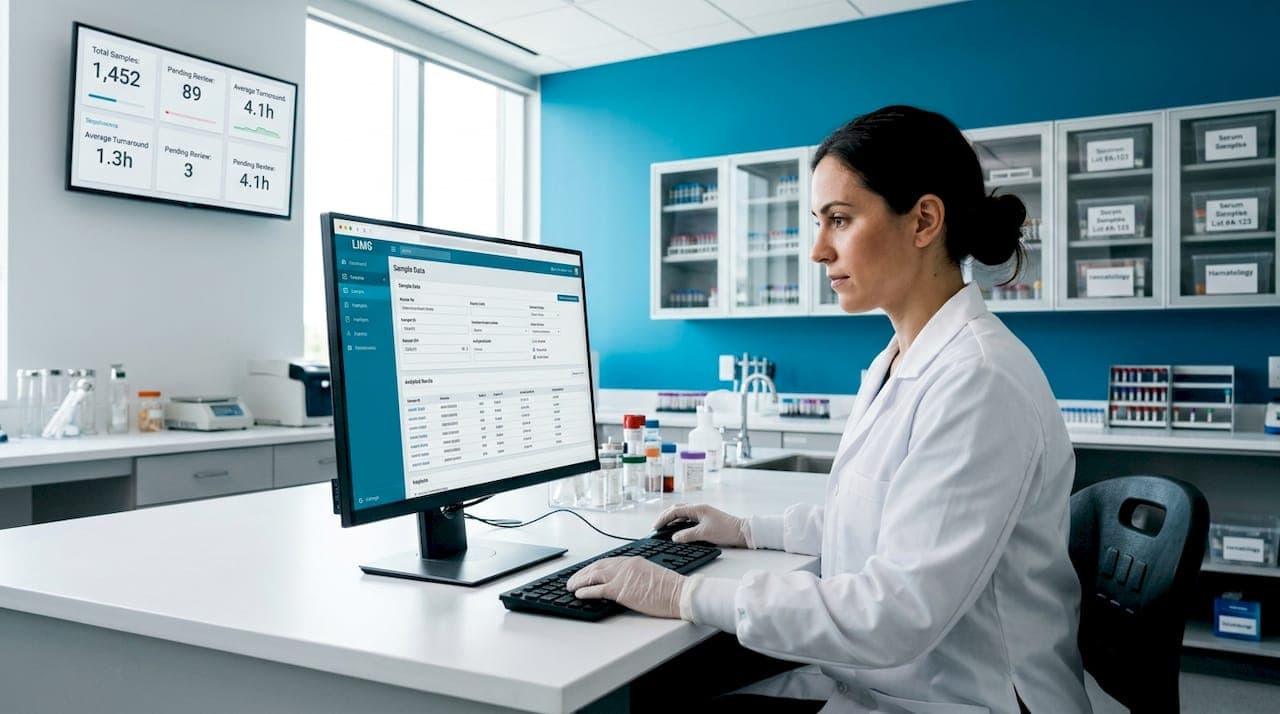
A Laboratory Information Management System (LIMS) is the operational backbone every new lab requires from its first day of testing. Labs that delay LIMS adoption face a 25% higher risk of data integrity citations during regulatory inspections, according to Astrix. Modern LIMS platforms deliver an average 15% productivity increase while cutting overhead costs by up to 30%. For startup laboratories in genetic testing, molecular diagnostics, or pharmacogenomics, the question is not whether to implement a LIMS. The question is whether you can afford to launch without one.
Why new labs need LIMS from launch: the core case
New labs that skip LIMS adoption at launch do not simply delay a software decision. They build their entire operational foundation on processes that will need to be dismantled and rebuilt under pressure. Every sample logged on a spreadsheet, every result recorded in a shared document, and every chain of custody tracked through email creates technical debt that compounds daily. The importance of LIMS for labs becomes undeniable the moment a regulatory auditor asks for a complete sample history and the answer involves scrolling through a Google Sheet.
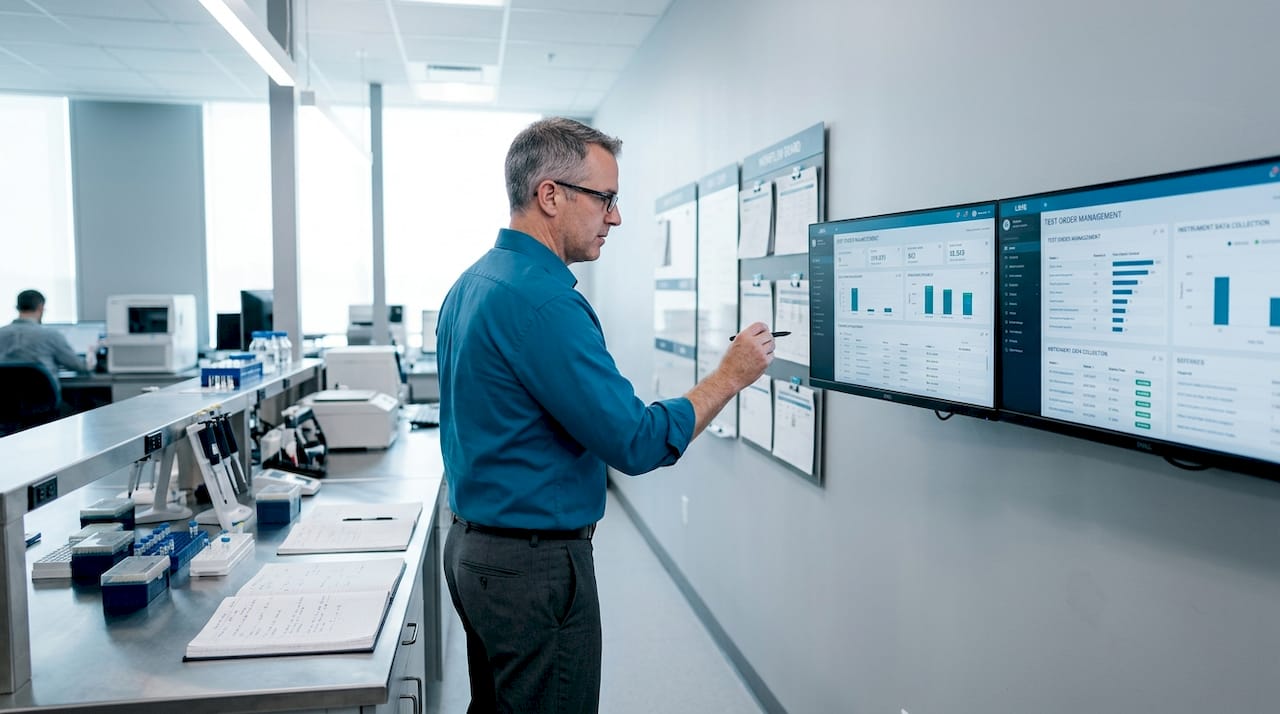
The core functions of a LIMS cover test order management, sample accessioning, workflow queue assignment, instrument data capture, audit trail generation, and result reporting. These are not optional features for mature labs. They are the minimum infrastructure required to operate a regulated laboratory safely and defensibly. Labrynix, built specifically for genetic testing and molecular diagnostic labs, integrates all of these functions into a single connected system designed around the complete sample-to-report workflow.
What risks do new labs face without a LIMS from the beginning?
The risks of launching without a LIMS are operational, financial, and regulatory. They do not announce themselves immediately. They accumulate quietly until a single audit, a mislabeled sample, or a failed batch release makes them impossible to ignore.
Data integrity and compliance exposure represent the most serious category of risk. Labs operating on paper or spreadsheet systems face a measurably higher probability of citation during FDA, CAP, or CLIA inspections. Manual transcription errors range from 1% to 6% across lab environments, and a single lost or mislabeled sample can cost more than $250 in retesting, investigation time, and compliance response. That figure does not include the reputational cost with the ordering provider.
Operational bottlenecks emerge faster than most lab managers expect. According to research on biotech startup LIMS needs, the spreadsheet threshold arrives when multiple scientists begin reconciling data through chat messages and sample provenance queries that should take 30 seconds start taking 30 minutes. Audits that should be completed in hours stretch into multi-day exercises. This is not a scaling problem. It is a structural problem that no amount of additional staff can fix without the right system underneath.
The specific risks new labs face without LIMS from day one include:
- Regulatory citation risk: A 25% higher probability of data integrity findings during inspections compared to LIMS-equipped labs.
- Sample tracking failures: Manual systems cannot maintain reliable chain of custody across multiple users, shifts, or sample types.
- Instrument data silos: Without LIMS integration, instrument outputs require manual transcription, multiplying error rates.
- Audit unreadiness: Reconstructing sample histories from disconnected records is time-consuming and often incomplete.
- Scalability ceiling: Spreadsheet-based tracking fails quickly once sample volumes grow beyond what a single person can manage.
How does a LIMS enhance productivity and operational efficiency for new laboratories?
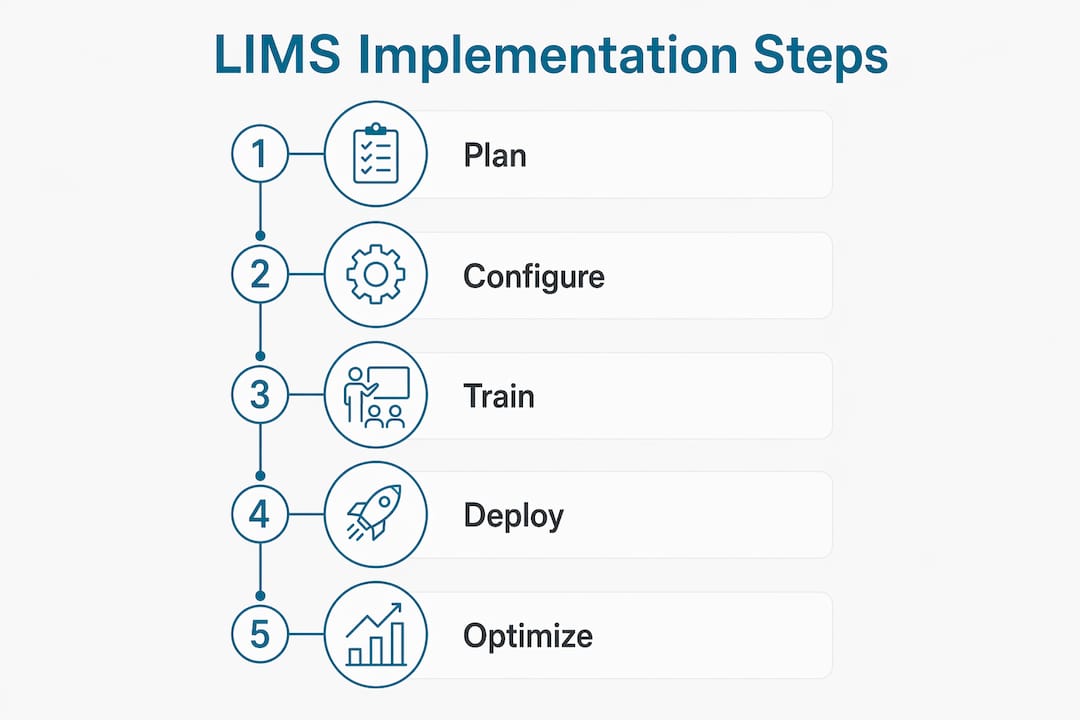
The productivity case for early LIMS adoption is quantifiable and well-documented. Moving from fragmented manual workflows to a centralized, cloud-based LIMS produces measurable gains within the first months of operation. Astrix research shows that phased LIMS implementation delivers quick wins by automating high-volume sample logging within the first 120 days. That single change alone removes the most error-prone step in most lab workflows.
The efficiency gains compound across the full sample lifecycle. Here is how a LIMS improves lab efficiency at each stage:
- Order intake and accessioning: Automated sample registration eliminates manual data entry, reduces transcription errors, and assigns samples to the correct workflow queue without human intervention.
- Workflow management: LIMS routes samples through defined process steps, flags deviations, and provides real-time visibility into queue status across the entire lab.
- Instrument integration: Direct connections between LIMS and lab instruments capture result data automatically, removing the manual transcription step entirely.
- Certificate of analysis (CoA) generation: Automated CoA workflows pull verified data directly from the LIMS record, reducing report preparation time from hours to minutes.
- Reporting and result delivery: For molecular and genetic labs, LIMS-connected reporting tools generate structured, provider-ready outputs without requiring staff to reformat data across multiple systems.
Pro Tip: When evaluating LIMS for startup laboratories, ask vendors specifically about their implementation timeline for high-volume sample logging automation. If they cannot commit to a working configuration within 90 to 120 days, that is a signal about their deployment model, not just their schedule.
The 30% reduction in overhead costs that modern LIMS platforms deliver comes primarily from eliminating redundant manual steps, reducing retesting caused by errors, and freeing staff to focus on higher-value work. For a new lab operating with a lean team, that efficiency gain is the difference between sustainable operations and constant firefighting. Mayflower Bioscience's analysis of molecular biology workflow optimization confirms that labs achieving 50% faster results consistently attribute the gains to systematic workflow automation rather than headcount increases.
What should new labs consider when selecting a LIMS at launch?
Selecting a LIMS based on a feature checklist is the most common and most costly mistake new lab managers make. According to Sakara Digital's 2026 analysis, features like sample management and instrument integration are now table stakes. Every credible LIMS vendor offers them. The decisions that determine long-term value are architecture, vendor operating model, validation approach, and data access.
The following comparison captures the most consequential tradeoffs new labs face when evaluating LIMS options:
| Consideration | Cloud SaaS LIMS | On-Premise LIMS |
|---|---|---|
| Upfront cost | Lower, subscription-based | Higher, license plus infrastructure |
| Validation burden | Vendor handles most validation | Lab bears full validation responsibility |
| Total cost over 10-15 years | More predictable, lower IT overhead | Often 2-3x initial cost when validation is included |
| Scalability | Scales with subscription tier | Requires hardware investment to scale |
| AI and API readiness | Typically API-first, AI-ready | Varies widely, often limited |
| Data portability | Confirm export rights in contract | Lab controls data directly |
Validation costs over a LIMS lifespan frequently reach two to three times the initial purchase price. Labs that choose cloud SaaS vendors who handle validation reduce this burden significantly. That calculation alone often reverses the apparent cost advantage of lower-priced on-premise systems.
Pro Tip: Before signing any LIMS contract, confirm in writing that you have the right to export your complete data in a standard format and that the vendor will provide exit assistance. Data portability is not a standard clause. You must negotiate it.
The other selection criterion that separates future-proof platforms from expensive dead ends is enterprise AI readiness through clean API access. A LIMS that locks your data behind proprietary exports or charges for API access will prevent you from building analytics, AI-powered reporting, or integration with external healthcare systems. For genetic and molecular labs, where data is the product, this is not a future consideration. It is a day-one requirement.
A configurable platform that allows internal administrators to modify workflows without vendor involvement reduces both dependency and cost over time. Labrynix is built on this principle, giving lab teams direct control over workflow queues, user roles, and reporting configurations without requiring a professional services engagement for every change.
How does LIMS support compliance and quality management from launch in regulated labs?
LIMS is no longer just a compliance tool. According to European Pharmaceutical Manufacturer, modern LIMS platforms function as continuous improvement infrastructure, supporting real-time anomaly detection, faster batch release, and proactive risk management. For labs operating under GMP, 21 CFR Part 11, CLIA, or CAP frameworks, this distinction matters. A LIMS that only satisfies audit requirements is a compliance cost. A LIMS that improves operations is a competitive asset.
Early LIMS adoption aligns lab operations with regulatory expectations from the start, reducing the disruption that inspections typically cause in labs that built their processes informally. The specific compliance capabilities a LIMS provides from launch include:
- Automated audit trails: Every sample action, data entry, result modification, and user access event is logged automatically with timestamps and user attribution.
- Electronic signatures: 21 CFR Part 11-compliant electronic signature workflows replace paper-based approval chains without creating compliance gaps.
- Chain of custody tracking: LIMS maintains an unbroken record of sample location, handling, and status from accessioning through result delivery.
- Reagent and instrument management: Integrated tracking of reagent lot numbers, expiration dates, and instrument calibration records supports traceability requirements without separate spreadsheets.
- Real-time quality monitoring: Automated alerts flag out-of-specification results, workflow deviations, and calibration due dates before they become compliance findings.
For molecular diagnostic and pharmacogenomics labs specifically, the compliance stakes extend beyond sample tracking. Report generation, clinical interpretation, and result delivery all carry regulatory weight. Labrynix embeds audit activity, role-based access, and configurable permissions throughout the full sample-to-report workflow, giving labs defensible documentation at every step.
Key takeaways
New labs that implement LIMS at launch build a defensible, scalable operational foundation that manual systems cannot replicate at any volume.
| Point | Details |
|---|---|
| Launch with LIMS, not after | Delaying LIMS adoption creates compliance debt and operational inefficiencies that are costly to unwind later. |
| Productivity gains are measurable | A modern LIMS delivers a 15% average productivity increase and up to 30% reduction in overhead costs. |
| Architecture beats features | Select LIMS based on vendor model, validation approach, and API access rather than feature lists alone. |
| Compliance starts at accessioning | Automated audit trails, electronic signatures, and chain of custody tracking must be active from the first sample. |
| AI readiness is a day-one criterion | A LIMS with clean API access protects your ability to build analytics and integrations as your lab grows. |
The real cost of waiting: a perspective on LIMS timing
I have worked with enough new labs to recognize a pattern that repeats itself with uncomfortable regularity. A lab launches with a spreadsheet, a shared drive, and a plan to "get the LIMS sorted once things settle down." Things never settle down. By month six, the spreadsheet has seventeen versions, two scientists have different sample counts for the same batch, and the first audit is three months away.
The cost of that delay is not just the remediation work. It is the habits that form in the absence of structure. Staff learn to work around the gaps. Workarounds become unofficial processes. Unofficial processes become the actual way the lab operates. When the LIMS finally arrives, you are not implementing new software. You are dismantling an informal system that people have become dependent on, and that is a much harder problem.
The other misconception I see consistently is treating LIMS selection as a one-time IT decision. It is not. A LIMS is a living system that requires a dedicated administrator, ongoing configuration, and deliberate maintenance as workflows evolve. Labs that assign LIMS ownership to whoever has spare capacity end up with a system that drifts from actual practice. The labs that get the most value from their LIMS treat the administrator role as a core operational position, not an afterthought.
My honest recommendation: select your LIMS before you process your first sample. Not because the software is complex to implement, but because the data you generate from day one deserves the same integrity controls as the data you generate at scale.
— Tarek
How Labrynix supports new labs from their first sample
Labrynix is built for the labs that cannot afford to get their operational foundation wrong. The platform combines LIMS workflow management, AI-powered reporting, provider and patient portals, billing visibility, and HL7/FHIR integration into one system designed specifically for genetic testing, molecular diagnostics, and pharmacogenomics labs. For new labs evaluating their options, Labrynix offers the API-first architecture and configurable workflow tools that Sakara Digital identifies as the defining criteria for long-term LIMS value. Labrynix also supports data reporting standards aligned with molecular biology best practices for labs building toward scalable, AI-ready operations. Explore what Labrynix can do for your lab at labrynix.com.
FAQ
What is a LIMS and why do new labs need it?
A LIMS (Laboratory Information Management System) manages sample tracking, workflow automation, data integrity, and audit trails across lab operations. New labs need it from launch because manual systems create compliance exposure and operational inefficiencies that compound rapidly with sample volume.
How quickly can a new lab implement a LIMS?
Phased LIMS implementation can automate high-volume sample logging within the first 120 days, delivering measurable productivity gains before full deployment is complete. Cloud SaaS platforms typically reach operational status faster than on-premise systems because the vendor manages infrastructure and validation.
What is the biggest mistake new labs make when selecting a LIMS?
Selecting a LIMS based solely on features rather than architecture, vendor operating model, and data access rights is the most common and costly error. Validation costs over a 10 to 15 year LIMS lifespan often reach two to three times the initial purchase price, making vendor model a more important selection criterion than any individual feature.
Does a LIMS help with FDA and CLIA compliance from day one?
A LIMS embeds automated audit trails, electronic signatures, and chain of custody tracking into every workflow, directly supporting 21 CFR Part 11, CLIA, and CAP requirements from the first sample processed. Labs with LIMS in place from launch face a 25% lower risk of data integrity citations during regulatory inspections.
Can a small startup lab afford a LIMS at launch?
Cloud SaaS LIMS platforms are subscription-based, eliminating the large upfront license and infrastructure costs associated with on-premise systems. The productivity gains and reduced retesting costs a LIMS delivers typically offset the subscription cost within the first year of operation.