
A Laboratory Information Management System, or LIMS, is the central tool laboratories rely on to enforce regulatory compliance by automating data capture, maintaining audit trails, and controlling access across every workflow. The role of LIMS in lab compliance goes far beyond record keeping. A properly implemented LIMS embeds regulatory requirements like ISO 17025, FDA 21 CFR Part 11, and ALCOA principles directly into daily operations, shifting labs from reactive audit preparation to continuous readiness. For genetic testing and molecular diagnostic labs, where data integrity and traceability carry direct patient care implications, this distinction is not academic. It is operational.
How does LIMS enforce data integrity and regulatory compliance?
Data integrity is the foundation of every compliance framework, and LIMS enforces it through automation rather than relying on analyst discipline alone. The ALCOA principles, which stand for Attributable, Legible, Contemporaneous, Original, and Accurate, define the minimum standard for compliant data in regulated labs. Modern LIMS platforms meet ALCOA requirements by automating data capture and creating unalterable audit trails that record who performed each action, when, and why. That level of traceability is what auditors from bodies like CAP, CLIA, and ISO accreditation programs look for first.
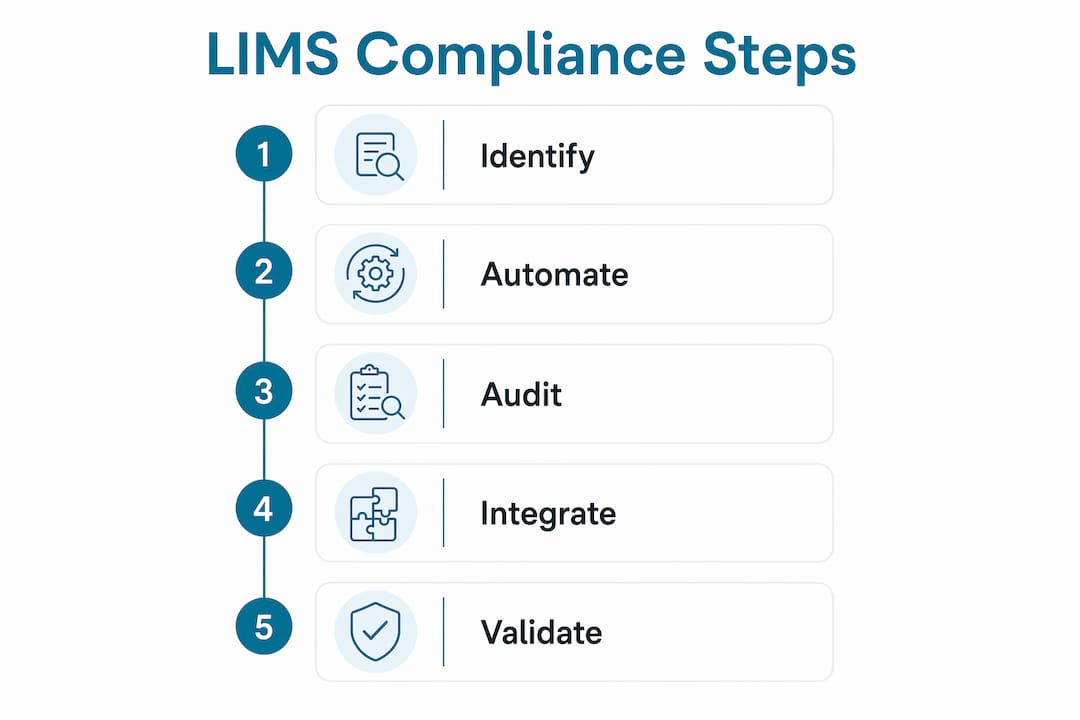
Manual data entry is where most compliance failures originate. A technician transcribing a result from an instrument printout to a spreadsheet introduces a gap in the chain of custody. LIMS eliminates that gap by capturing instrument output directly, timestamping it, and linking it to the specific analyst, sample, and method version in use at that moment.
Key data integrity functions a compliant LIMS must provide:
- Automated audit trails that record every data entry, modification, and deletion with a timestamp and user ID
- Electronic signatures tied to analyst credentials, meeting FDA 21 CFR Part 11 requirements
- Role-based access controls that prevent unauthorized changes to finalized records
- Version-controlled SOPs linked to active workflows, so analysts always work from the current approved method
- Contemporaneous data capture from instruments, meeting ISO 17025 and 15189 standards for data integrity
Pro Tip: Review your LIMS audit trail reports quarterly, not just before inspections. Patterns in data corrections often reveal training gaps or workflow design problems before they become findings.
What does ISO 17025 Clause 6.4.7 require from LIMS software?
ISO 17025 Clause 6.4.7 is the specific requirement that catches many labs off guard. It mandates that any software used for laboratory data handling must be validated for its intended use with documented Installation Qualification, Operational Qualification, and Performance Qualification evidence. Generic software configurations without this documentation do not satisfy the clause, regardless of vendor reputation.
IQ, OQ, and PQ are not interchangeable terms. Each serves a distinct purpose:
- Installation Qualification (IQ): Confirms the software was installed correctly in your specific environment, including server configuration, network settings, and user access provisioning.
- Operational Qualification (OQ): Verifies that the software functions as specified under normal operating conditions, testing each feature against documented requirements.
- Performance Qualification (PQ): Demonstrates the system performs consistently over time within your actual lab workflows, using real test scenarios and sample types.
The critical point is that validation must be tailored to your lab's specific workflows. A validation package provided by a vendor covers the software in general. Your lab must document how the system performs in your environment, with your instruments, your sample types, and your reporting requirements. Validation is an ongoing program, not a one-time installation event. Auditors increasingly expect contemporaneous validation records, not documents assembled after the fact.
Pro Tip: Build your validation schedule into your annual quality calendar. Treat each major software update as a trigger for at least a partial OQ review, and document it before the update goes live in production.
How does LIMS transform audit preparation into continuous readiness?
The traditional audit preparation cycle in most labs follows a predictable and painful pattern: an inspection date is announced, staff scramble to locate records, QC logs are printed, and nonconformance reports are closed out in a rush. Integrated LIMS platforms break that cycle by making compliance a byproduct of normal daily operations rather than a separate project.
The shift happens because LIMS embeds compliance controls into every workflow step. When an analyst logs a result, the system simultaneously records the timestamp, the method version, the instrument calibration status, and the analyst's current training record status. Nothing requires a separate compliance action because the compliance action is the workflow action.
Specific functions that support continuous audit readiness include:
- Instant audit trail generation: Any authorized user can pull a complete chain of custody for any sample at any time, not just during inspections
- Calibration schedule tracking: The system flags overdue instrument calibrations and blocks results from uncalibrated instruments from being finalized
- Nonconformance and CAPA workflows: Every deviation is logged, assigned, tracked to closure, and linked to the affected results automatically
- Personnel and training records: Role-based permissions prevent analysts from performing tasks they are not currently qualified for, with training status verified at login
- Document control integration: SOPs, method validations, and reference ranges are version-controlled, and the system records which version was active for each result
Effective LIMS use changes lab posture from episodic audit preparation to continuous accreditation readiness. That shift reduces inspection risk and builds credibility with accrediting bodies that now conduct more frequent and unannounced reviews.
How does LIMS integration with instruments and systems reduce compliance risk?
Instrument integration is where the compliance benefits of LIMS become most concrete. LIMS integration with instruments automates data capture, enforces procedural compliance, and links calibration data directly to analytic results. That linkage satisfies scrutiny from FDA, EMA, and other global regulators who require proof that reported results came from instruments that were calibrated and performing within specification at the time of analysis.
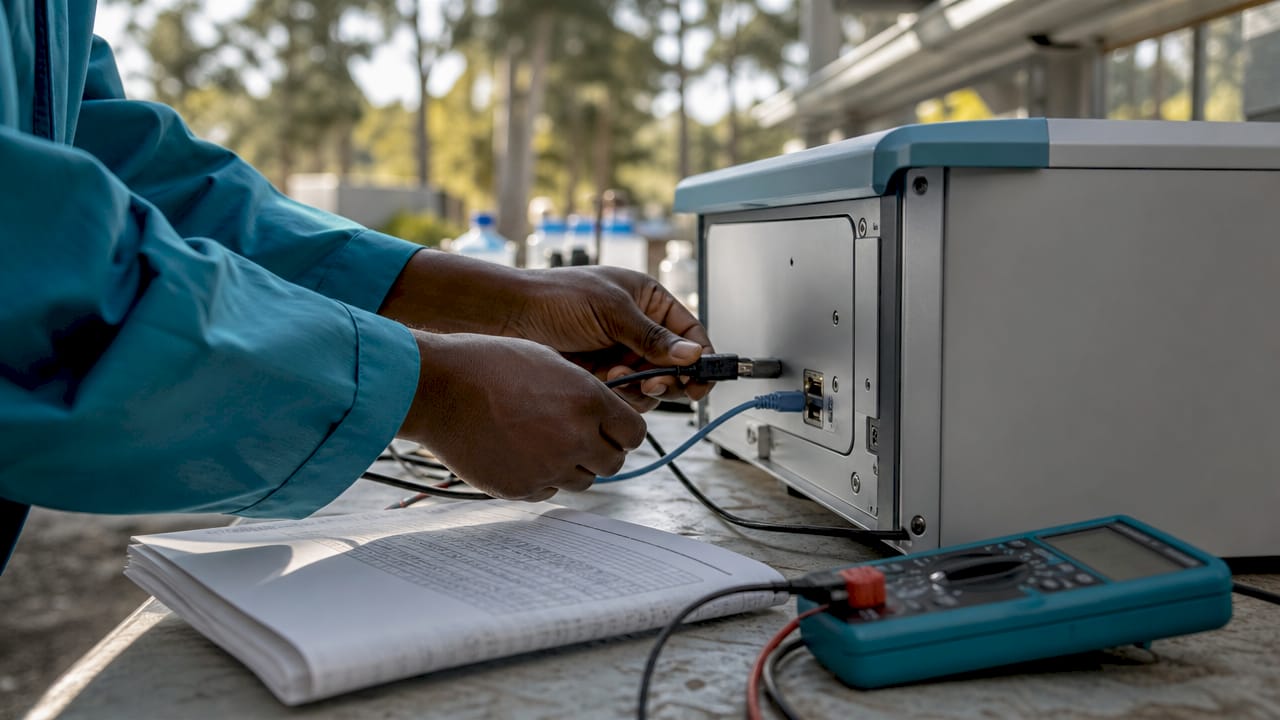
The compliance difference between manual and integrated workflows is significant:
| Workflow type | Data entry method | Audit trail completeness | Calibration linkage |
|---|---|---|---|
| Manual (paper or spreadsheet) | Analyst transcription | Incomplete, reconstructed | Separate log, not linked to results |
| Partially integrated | Some automated capture | Partial, gaps possible | Manual cross-reference required |
| Fully integrated LIMS | Automated from instrument | Complete, contemporaneous | Automatic, result-level linkage |
Integration also extends to quality management systems for document control, ERP systems for reagent lot tracking, and EHR or EMR platforms for order and result exchange. Labrynix Connect supports HL7, FHIR, APIs, and webhooks, giving molecular diagnostic labs a direct path to connecting instruments and external systems without building custom middleware.
Pro Tip: When evaluating integration depth, ask specifically whether the LIMS links instrument calibration records to individual results at the data level, not just at the report level. Auditors test this distinction.
Best practices for using LIMS in accreditation prep and ongoing compliance
The labs that get the most from their LIMS in accreditation contexts are the ones that treat implementation as a compliance design exercise, not a software installation project. Mapping LIMS functions directly against specific regulatory clauses, rather than just connecting system components, is what separates labs that pass audits cleanly from those that collect findings.
Practical guidance for lab managers and compliance officers:
- Map LIMS configuration to regulatory clauses: For each ISO 17025 or CLIA requirement, identify the specific LIMS feature that satisfies it and document that mapping in your quality manual.
- Run continuous validation programs: Schedule IQ/OQ/PQ reviews after every major update and document them contemporaneously. Do not rely on vendor release notes as your validation evidence.
- Conduct regular audit trail reviews: Assign a compliance officer to review audit trail reports monthly. Look for patterns in corrections, deletions, or access anomalies.
- Use LIMS dashboards for compliance monitoring: Most modern platforms surface QC trends, overdue calibrations, and open nonconformances in real time. Use these views in your weekly operations meetings.
- Align IT, compliance, and lab operations: LIMS validation failures often trace back to IT changes made without compliance review. Establish a change control process that requires sign-off from all three groups before any system modification.
Pro Tip: For new lab credentialing, implement your LIMS before you write your quality manual. The system's enforced workflows will reveal gaps in your procedures that a document-first approach misses entirely.
The importance of LIMS in labs pursuing accreditation is not just about having the right software. It is about configuring that software to make non-compliance structurally difficult, so that doing the work correctly and doing it compliantly are the same action.
Key Takeaways
A compliant LIMS does not just store records. It makes non-compliance structurally difficult by embedding regulatory requirements into every workflow step, from sample accessioning through final result delivery.
| Point | Details |
|---|---|
| ALCOA compliance requires automation | Manual data entry creates traceability gaps; LIMS automates capture and timestamps every action. |
| ISO 17025 validation is ongoing | IQ, OQ, and PQ must be tailored to your lab's workflows and updated after every major system change. |
| Audit readiness is a daily state | LIMS embeds compliance into normal operations, so records are always inspection-ready without extra effort. |
| Instrument integration closes the loop | Linking calibration data to individual results at the data level satisfies FDA and EMA scrutiny. |
| Configuration must map to clauses | Auditors test system functionality, not just documentation; LIMS must enforce each regulatory requirement by design. |
What I've learned from watching labs treat LIMS as a filing cabinet
Most compliance failures I've seen in genetic and molecular labs trace back to the same root cause: the lab bought a LIMS, loaded it with data, and then used it primarily as a searchable archive. The system was present. The compliance was not.
The labs that genuinely master regulatory adherence configure their LIMS so that the system enforces the rule, not the analyst. When a workflow step requires a supervisor review before a result is released, the system should make it impossible to skip that step, not just record that it was skipped. That design philosophy is what separates a compliant lab workflow from a documented one.
The other lesson I keep returning to is that validation is never finished. I've watched labs pass their initial ISO 17025 assessment with clean validation packages, then receive findings two years later because a software update changed a workflow and nobody triggered a revalidation. The update was minor. The finding was not. Treat every system change as a potential compliance event and document your review of it, even if the conclusion is that no revalidation is needed.
For labs in new credentialing or early accreditation prep, the single best investment is implementing LIMS before finalizing your quality manual. The system's enforced workflows will surface procedural gaps that no amount of document review will catch. Build the compliance into the system first, then write the procedures that describe what the system already does.
— Tarek
Labrynix LIMS: built for genetic and molecular lab compliance
Genetic and molecular diagnostic labs face compliance requirements that generic laboratory software was never designed to handle. Labrynix was built specifically for this environment, by a team with direct experience running CLIA-certified genetic labs.
The Labrynix LIMS platform includes role-based access controls, audit trail management, workflow queue enforcement, and instrument integration pathways through HL7, FHIR, and direct APIs. These features support ISO 17025 validation requirements, ALCOA data integrity standards, and continuous audit readiness without requiring labs to build compliance infrastructure from scratch. Labs focused on molecular diagnostic workflows can configure Labrynix to enforce each regulatory clause at the workflow level, making compliant operation the path of least resistance for every analyst on your team.
FAQ
What is the role of LIMS in lab compliance?
A LIMS enforces regulatory compliance by automating data capture, maintaining unalterable audit trails, and embedding quality controls into daily workflows. It supports frameworks including ISO 17025, FDA 21 CFR Part 11, GLP, and ALCOA data integrity principles.
How does LIMS support ISO 17025 accreditation prep?
ISO 17025 Clause 6.4.7 requires software validation with documented IQ, OQ, and PQ evidence specific to your lab's workflows. A properly configured LIMS generates the contemporaneous records that accreditation auditors require and enforces the procedural controls that prevent findings.
What is the difference between audit readiness and audit preparation?
Audit preparation is a reactive effort triggered by an upcoming inspection. Audit readiness is a continuous state where compliance records are always current because the LIMS embeds compliance into every daily workflow step automatically.
Does LIMS integration with instruments improve compliance?
Yes. Instrument integration links calibration data directly to individual analytic results at the data level, eliminating transcription errors and satisfying FDA and EMA requirements for data accuracy and traceability.
When should a new lab implement LIMS for credentialing purposes?
A new lab should implement LIMS before finalizing its quality manual. The system's enforced workflows reveal procedural gaps earlier, and the validation documentation generated during implementation becomes part of the accreditation evidence package.