
A production-ready genetic test order intake must capture validated patient identifiers, specimen data, order codes, and billing fields within a LIMS that enforces accession controls, audit logging, and HL7/FHIR interface contracts. Platforms like Labrynix implement this end-to-end, and the APHL LIS Integration Guide is the authoritative US reference for structuring the project.
Before your team writes a single interface spec, confirm these non-negotiables are in scope:
- Patient identifiers: MRN, date of birth, insurance subscriber ID
- Specimen identifiers: accession number, container barcode, SPM segment fields
- Order identifiers: placer order number (ORC-2), filler order number (ORC-3), test panel codes
- Billing fields: CPT/HCPCS codes, ICD-10 diagnosis codes, billing provider NPI, payer ID
- Accession controls: barcode assignment rules, specimen acceptability criteria, routing logic
- Audit logging: immutable timestamps on every create, update, and status change
Assign a project owner this week, then schedule an As-Is mapping workshop before any vendor conversations begin.
Key Takeaways
A production-ready genetic test order intake requires validated patient and specimen identifiers, HL7/FHIR interface contracts, accession controls, billing field capture, and immutable audit logging before any interface goes live.
| Point | Details |
|---|---|
| Start with As-Is documentation | Run a mapping workshop before writing any interface spec; the APHL guide makes this the mandatory first step. |
| Enforce idempotency from day one | Map ORC-2/ORC-3 to ServiceRequest identifiers and use them as correlation keys across all systems. |
| Accession number is the specimen's identity | One system generates it; every other system references it. Split ownership causes collisions. |
| Test in phases before scaling | Unit, integration, UAT, and pilot phases each catch different failure modes; compressing them creates production risk. |
| Labrynix covers the full checklist | HL7/FHIR connectivity, configurable accessioning, PGx reporting, billing visibility, and RBAC audit logs in one platform. |
Table of Contents
- What does "genetic test order intake" actually cover for your lab?
- How to run an As-Is workflow mapping workshop
- How to design the To-Be workflow and assign system ownership
- What data elements does your intake system need to capture?
- Which integration mechanism fits your environment?
- What system interactions belong in your interface contract?
- How to run accessioning without errors
- Capture billing and payer data at order intake
- Security, audit trails, and compliance controls
- Testing and go-live plan
- Roles, timeline, and maintenance budget
- Common implementation pitfalls and red flags
- How Labrynix maps to this implementation checklist
- A lab operations perspective on order intake projects
- Labrynix for genetic test order intake and accessioning
- Sources
What does "genetic test order intake" actually cover for your lab?
In lab operations, the genetic test order intake process refers to the LIMS-managed capture of provider and patient orders, specimen accessioning, billing data collection, and routing into testing workflows. It is not about the clinician-side ordering experience, patient self-ordering portals, or test marketing.
In-scope items include LIMS intake screens, accession label generation, HL7/FHIR interface contracts, billing code mapping, accessioning validation checks, provider portals, and instrument routing rules. Out of scope: how a clinician navigates an EMR order entry screen, direct-to-consumer test kits, and vendor selection comparisons. If your team is debating those topics, this guide is not the right starting point.
How to run an As-Is workflow mapping workshop
The APHL LIS Integration Guide is explicit: documenting the existing workflow before designing any interface is the single most important step in an LIS/LIMS integration project.
- Assemble the right people. Accessioning lead, LIMS admin, integration engineer, lab manager, billing analyst, and at least one outreach clinic IT contact. Missing any of these creates blind spots.
- Collect physical artifacts. Pull paper requisitions, electronic order samples, instrument spec sheets, EMR orderable lists, and any known exception logs from the past 90 days.
- Walk the order from door to result. Observe a live accessioning shift. Note every point where a staff member re-keys data manually — those are your highest-risk failure points.
- Ask the hard questions. Who resolves a mislabeled specimen? What happens when a panel code doesn't match the LIMS test menu? Where does a corrected result go after it posts?
- Document exceptions explicitly. Local codes, add-on order rules, and referral lab hand-offs are almost always undocumented. Capture them now or they will break your interface later.
Common As-Is findings: manual rekeying between the EMR and LIMS, ambiguous panel definitions that map to multiple test codes, and billing fields captured on paper but never validated electronically.
How to design the To-Be workflow and assign system ownership
Turn As-Is findings into a To-Be specification that names every system, data flow, and responsible team. The APHL guide identifies three integration models worth evaluating:
| Model | How it works | Best fit | Watch out for |
|---|---|---|---|
| Centralized exchange | Single hub routes all orders and results | Multi-site labs, reference labs | Hub becomes a single point of failure |
| Per-site LIS | Each site has its own LIS with direct EMR connections | Single-site labs with stable volumes | Duplicated mapping effort per site |
| Hybrid | Central hub for high-volume interfaces, direct for edge cases | Growing lab networks | Governance complexity across both models |
Ownership must be explicit. Order validation belongs to the LIMS admin and lab operations lead. Accessioning belongs to the accessioning team with LIMS enforcement. Result posting belongs to the integration engineer with lab director sign-off. Billing handoff belongs to the billing analyst. External referrals belong to the lab manager with a defined SLA.
A sample To-Be flow: EMR pushes ORM → LIMS validates and accessions → instrument receives work order → result posts as ORU → LIMS triggers billing feed → provider portal delivers report. Add audit checkpoints at order receipt, accession assignment, result post, and billing handoff.
What data elements does your intake system need to capture?
Get these fields right at intake and every downstream process runs cleaner. Missing any leads to denials and redraws.
Patient identifiers
- MRN (PID-3), date of birth (PID-7), full legal name (PID-5), insurance subscriber ID
Specimen identifiers
- Accession number (the single source of truth for specimen tracking), container barcode, SPM segment fields (specimen type, collection date/time, volume)
Order identifiers
- Placer order number (ORC-2), filler order number (ORC-3), LOINC test codes, local panel codes, UCUM units
Billing fields
- CPT/HCPCS codes, ICD-10 diagnosis codes (where medical necessity applies), billing provider NPI, payer name and ID, authorization number if required
For identifier mapping: ORC-2/ORC-3 map to the ServiceRequest identifier in FHIR and serve as the canonical correlation keys across systems. PID-3 drives patient matching. The accession number is the specimen's identity — never let two systems generate it independently.
Pro Tip: At accessioning, scan the container barcode and compare it against the printed label before assigning the accession number. A mismatch caught here costs 30 seconds; a mismatch caught after processing costs a redraw and a patient call.
Which integration mechanism fits your environment?
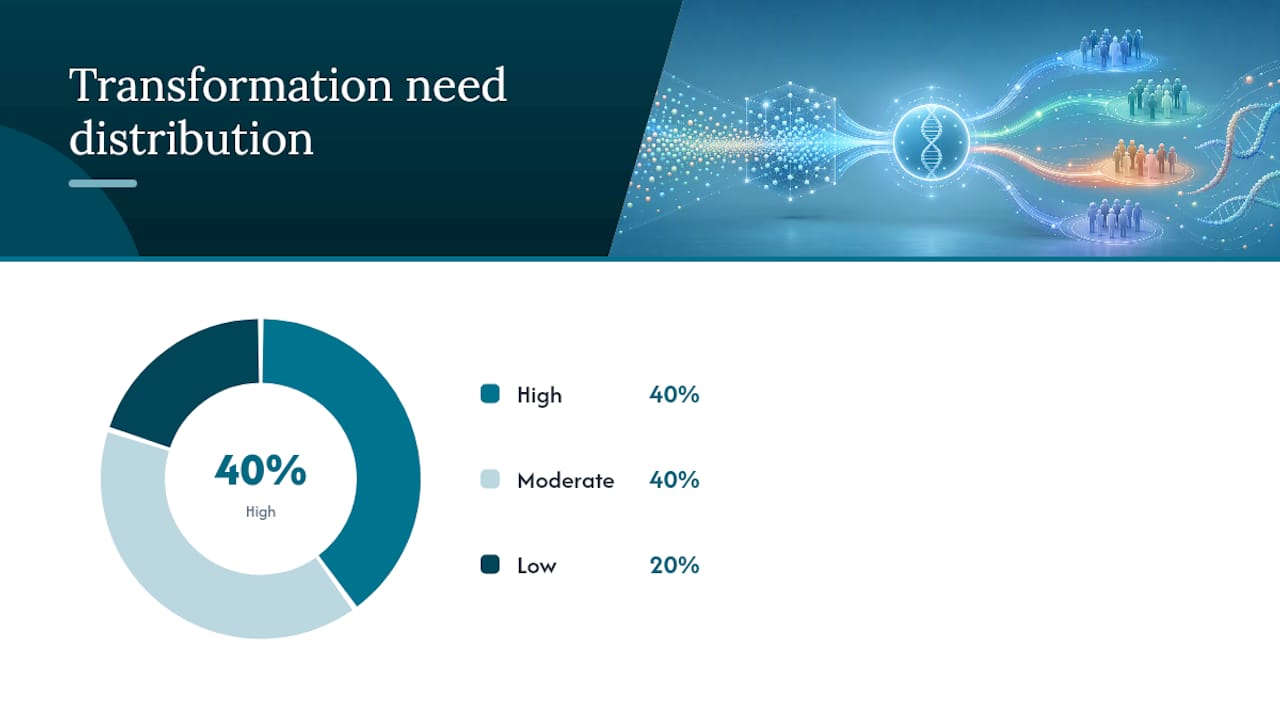
| Mechanism | Speed | Transformation need | Idempotency | Maintenance cost |
|---|---|---|---|---|
| HL7 v2 (ORM/ORU) | Near-real-time | High (per-vendor normalization) | Requires ORC-2/3 keys | Per-vendor mapping updates |
| FHIR R4 APIs | Near-real-time | Moderate (standard resources) | Built into resource IDs | API versioning governance |
| ETL batch | Minutes to hours | High | Deduplication logic required | Schema change management |
| Secure file drop (SFTP/AS2) | Minutes to hours | Moderate | Filename/timestamp dedup | Manual monitoring risk |
| Portal entry | Immediate (manual) | Low | User-driven | Training and adoption cost |
HL7 v2 ORM/ORU messages map to FHIR ServiceRequest and DiagnosticReport resources, but vendor message variability means per-vendor normalization is almost always required before any FHIR transformation layer can run reliably. Plan for it.
Push vs. pull: EMRs typically push ORM messages to the LIMS. The LIMS pushes ORU results back. FHIR Subscriptions work well for near-real-time status notifications without polling. ETL and file drops suit legacy systems where API connectivity is not available.
Long-term maintenance reality: HL7 v2 interfaces accumulate per-vendor mapping debt. FHIR APIs require API governance and version management. ETL pipelines need schema change tracking. Budget for all three categories before go-live.
What system interactions belong in your interface contract?
Prioritize interactions that are time-sensitive or high-frequency — the APHL guide is direct on this point. Define these first:
- EMR to LIMS: ORM order message, required segments (MSH, PID, PV1, ORC, OBR), expected ACK within a defined SLA
- LIMS to instrument: work order push, result pull or push, QC flag handling
- LIMS to billing system: charge capture trigger, CPT/HCPCS mapping, claim status feedback loop
- LIMS to provider portal: result availability notification, report delivery confirmation
- Lab-to-lab referrals: specimen manifest, order hand-off message, result receipt confirmation
Every contract must specify: required segments and fields, status transitions (preliminary → final → corrected), timestamps in ISO 8601 with explicit timezone, and idempotency keys. Define retry policies, maximum retry counts, and what happens to messages that exhaust retries — a dead-letter queue (DLQ) with alerting is not optional. A workflow-first integration approach with durable queues and deterministic code maps measurably reduces redraws and support calls in production.
How to run accessioning without errors
A standardized accessioning workflow measurably reduces errors and sets up every downstream process for success.
- Receive shipment. Log carrier, temperature indicator status, and arrival timestamp.
- Match requisition. Confirm the paper or electronic requisition matches the specimen manifest.
- Verify patient identifiers. Check MRN, DOB, and name against the LIMS order record.
- Check specimen acceptability. Volume, container type, collection date/time, and hemolysis or lipemia flags.
- Assign barcode accession. LIMS generates the accession number; print and apply the label immediately.
- Route to testing. LIMS assigns the work queue based on test code and instrument availability.
Exception handling: QNS (quantity not sufficient) triggers a redraw request with a documented reason code. Wrong container triggers a hold and a provider notification. Mislabeled specimens go to a quarantine queue pending supervisor review. Add-on orders attach to the existing accession if the specimen is still viable. Referral specimens generate an outbound manifest with the accession number as the tracking key.
Capture billing and payer data at order intake
Billing fields captured at intake prevent denials downstream. Collect these at the point of order, not after accessioning:
- Payer name and payer ID
- Subscriber ID and group number
- CPT/HCPCS codes linked to the ordered panel
- ICD-10 diagnosis codes (required for medical necessity documentation)
- Billing provider NPI and rendering provider NPI
- Prior authorization number if the payer requires it
Link each orderable panel to its CPT code in the LIMS test menu. LOINC codes sit between the clinical order and the billing code — they are the interoperability layer, not the billing layer. Reconcile intake records against the billing feed weekly and route denial reason codes back to the intake team so systemic mapping errors get corrected at the source.
Security, audit trails, and compliance controls
Every intake system must provide these controls for HIPAA-conscious operations:
- RBAC with least privilege: accessioning staff see only their queue; billing staff see only billing fields; no role has blanket read/write access
- Managed secrets: integration credentials stored in a secrets manager, never in config files or source code
- Encryption in transit and at rest: TLS 1.2 or higher for all message transport; encrypted storage for PHI fields
- Immutable audit logs: every order create, accession assignment, status change, and result post carries a timestamp, user ID, and message ID that cannot be edited
- DLQ event logging: failed messages logged with full payload and error reason for investigation
- Data retention policy: define retention periods for orders, results, and audit logs per your lab's compliance obligations
- Attachment handling: PDFs and scanned requisitions stored with access controls; third-party OCR processing requires a BAA and data residency review
Testing and go-live plan
Run these phases in sequence. Do not compress them under schedule pressure.
Unit tests: parse a representative sample of ORM messages from each sending system. Verify field mapping, code translation, and accession rule logic in isolation.
Integration tests: run end-to-end ORM → accession → ORU flows in a staging environment. Confirm ACK latency meets your SLO, idempotency holds on duplicate messages, and billing fields populate correctly.
UAT with clinic partners: send real (de-identified) order scenarios with your outreach clinic IT team. Validate that their EMR's ORM output maps cleanly and that result delivery reaches the provider portal.
Pilot with live orders: one clinic, one test panel, monitored closely. Acceptance criteria: idempotency verified, ACK latency SLO met, sample routing correct, billing mapping reconciled, no data loss through retries.
Post-go-live, track these operational monitoring signals: ACK timing, DLQ age, retry counts, and redraw rate. Write runbooks for the three most likely failure modes before you flip the switch.
Roles, timeline, and maintenance budget
| Role | Responsibility |
|---|---|
| Project sponsor | Budget, escalation, go/no-go decisions |
| Integration lead | Interface contracts, message specs, vendor coordination |
| LIMS admin | Intake configuration, test menu, accession rules |
| Lab operations SME | Accessioning workflow, exception handling, training |
| QA/test engineer | Test plan execution, UAT coordination |
| Billing analyst | CPT/LOINC mapping, denial reconciliation |
Phase timeline estimates:
- Discovery and As-Is documentation: 3–6 weeks. Common blocker: getting EMR vendor cooperation.
- To-Be design and interface contracts: 4–8 weeks. Common blocker: unresolved code mapping decisions.
- Build and unit/integration testing: 6–12 weeks. Common blocker: per-vendor HL7 normalization surprises.
- UAT and pilot: 4–6 weeks. Common blocker: clinic scheduling and staff availability.
- Scale and stabilization: ongoing. Budget for monthly code-map reviews and quarterly interface audits.
Ongoing maintenance is consistently underbudgeted. Every new sending system adds per-vendor mapping work. LOINC and CPT code updates require a change-control process with a canary cohort before broad rollout.
Common implementation pitfalls and red flags
Missing idempotency keys. If ORC-2/ORC-3 are not enforced as correlation keys, duplicate orders and duplicate results will appear in production. Fix it in the interface contract, not after go-live.
No code-map governance. LOINC, UCUM, and local code maps that change without version control cause silent mapping failures. Institute a governance board and require a canary cohort for every change.
Incomplete accession controls. Letting two systems generate accession numbers independently guarantees collisions. The LIMS owns accession generation, period.
Single-person knowledge. If only one engineer understands the HL7 normalization layer, you have a staffing risk. Document it and cross-train.
No DLQ or observability. Messages that fail silently are the most dangerous kind. A DLQ with alerting and a runbook is a go-live requirement, not a nice-to-have.
When to pause a go-live: multiple unresolved DLQ errors in staging, failed billing reconciliation, or any clinical safety concern raised during UAT. A delayed go-live is recoverable. A bad go-live with patient data errors is not.
How Labrynix maps to this implementation checklist
Labrynix is built specifically for genetic, molecular, pharmacogenomics, and precision medicine labs — and its feature set maps directly to the checklist above.
- HL7 and FHIR connectivity via Labrynix Connect: supports ORM/ORU message handling, FHIR R4 API integration, webhooks, and EMR/EHR connections
- Configurable intake validation: required field enforcement, specimen acceptability rules, and accession number generation within the LIMS
- Accessioning workflows: barcode-driven accessioning, routing rules, and exception queues built into the platform
- PGx reporting: CPIC guideline support, PharmGKB-informed annotations, and customizable branded report templates with AI-assisted summaries
- Billing visibility: Labrynix Billing surfaces claim stages, invoice workflows, and payment tracking without replacing your billing system
- RBAC and audit logs: role-based access, immutable audit trails, and HIPAA-conscious deployment patterns across the platform
- Provider and patient portals: secure result delivery and order status visibility for outreach clinics and patients
The role of LIMS in genetic report delivery is well-documented, and Labrynix closes the loop from order intake through final report delivery in one connected system. For pharmacogenomics labs, the platform's CPIC and PharmGKB support means clinical interpretation stays current without manual database maintenance. For a deeper look at how LIMS and LIS responsibilities divide in genetic testing, the LIMS vs. LIS guide is worth reading before your To-Be design session.
Pro Tip: Ask any LIMS vendor to walk through their DLQ handling and code-map governance process during the demo. A vendor that cannot show you both in 10 minutes has not solved the hard part of integration.
A lab operations perspective on order intake projects
The checklist in this guide is accurate, but the hardest part of any order intake project is not the technology. It is getting accessioning staff to trust the new system enough to stop their paper workarounds. That trust is earned through training that uses real scenarios from their own lab, not generic demos.
Two practical tips: first, run a parallel period where both the old and new intake processes run simultaneously for at least two weeks on a single panel. Staff catch their own errors faster when they can compare outputs side by side. Second, write your runbooks before training begins, not after. Staff who have a laminated one-page exception guide at the accessioning bench make fewer escalation calls in the first month.
Include a scheduled audit at 30 days and 90 days post-go-live in the project plan. The 30-day audit catches mapping errors that only appear with real order volume. The 90-day audit catches the process drift that happens once the go-live energy fades.
Labrynix for genetic test order intake and accessioning
Genetic labs that have outgrown disconnected spreadsheets, manual rekeying, and generic LIMS platforms need software that was built for this specific workflow from the start.

Labrynix delivers a connected system covering LIMS order intake, accessioning, HL7/FHIR integrations, PGx reporting, billing visibility, and provider portals — all in one platform designed around the genetic testing workflow, not adapted from a general clinical lab tool. For labs evaluating their options, the Labrynix solutions page shows how the platform modules fit together by lab type, including molecular diagnostics, reference labs, and PGx programs. To scope a pilot for a single clinic or test panel, contact Labrynix directly through the solutions page and request a workflow review session.
Sources
Standards and mapping
- APHL LIS Integration Guide
- Lab LIS Integration: HL7 ORM/ORU to FHIR mapping
- LIS integration in healthcare – orders to results | Healthcare Integrations
- Sample Accessioning Workflow Guide | Gistia
Accessioning and integration operations
Labrynix implementation resources