
Choosing a laboratory information management system that meets compliance, workflow, and integration needs is still difficult for most labs. Many platforms lock workflow features or billing modules behind complex quotes, unlisted pricing, or require major IT resources for setup. This comparison covers features, compliance focus, integration reach, and onboarding complexity so laboratory managers can select a LIMS that fits their operation and budget.
Table of Contents
- Labrynix
- Prolis LIS Software
- AminoCloud
- CloudLIMS
- LabVantage LIMS
- Comparison of alternatives
- Comparison of alternatives
Labrynix
At a Glance
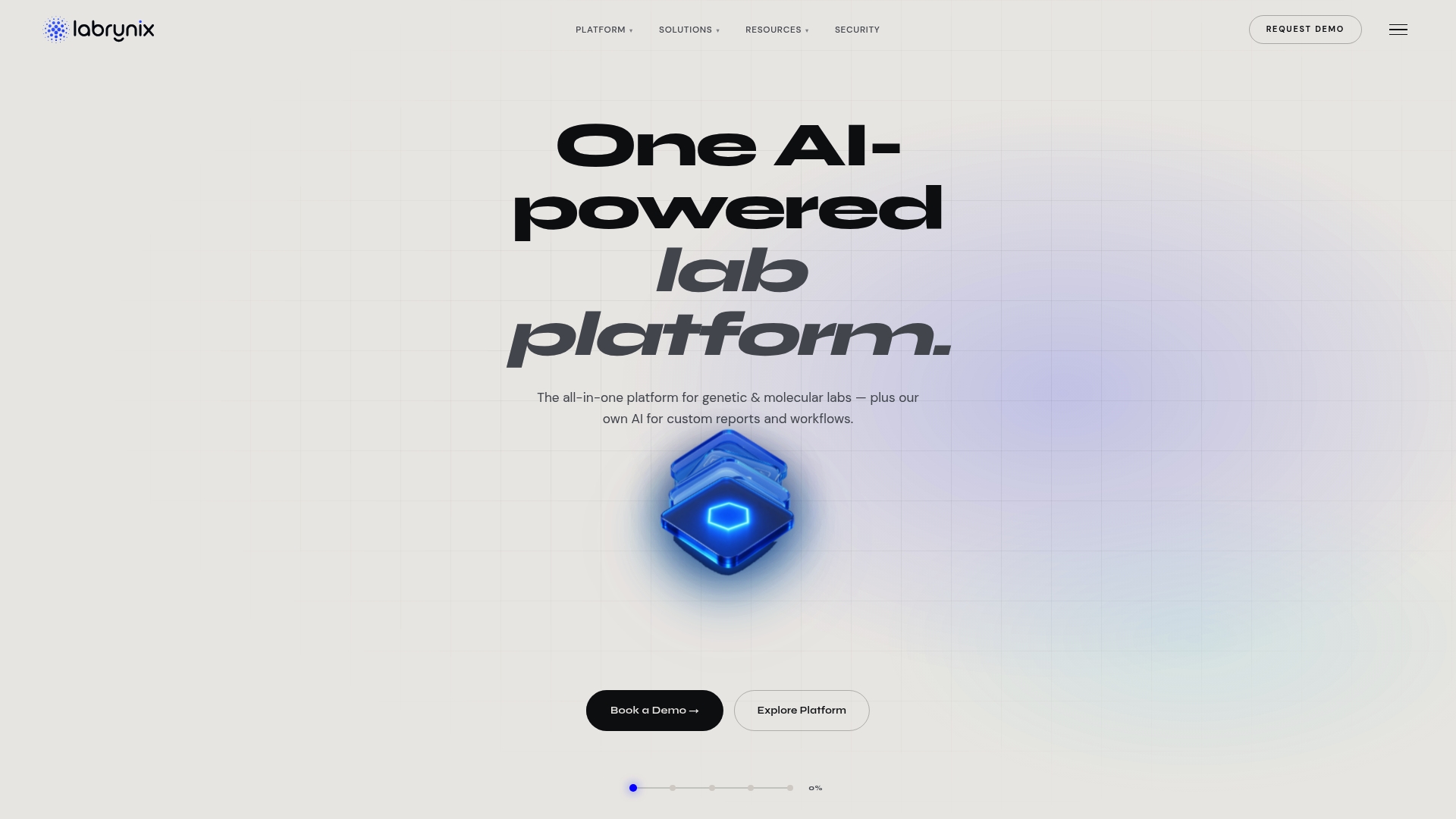
Built on lab trained AI that generates custom workflows, tailored reports, and automation agents specific to genetic and PGx labs. The platform unifies LIMS operations, reporting, portals, billing visibility, and operational analytics into one product. Labs report this design reduces manual handoffs and centralizes clinical review and audit activity.
Core Features
Labrynix LIMS centralizes order intake, accessioning, sample status, workflow queues, user roles, and audit logs to maintain chain of custody and review trails. Labrynix Reports produces branded pharmacogenomics and genetic testing reports with customizable templates, AI assisted summaries, and lab approved interpretation rules. Connect, Portal, Billing, and Intelligence modules provide HL7 and FHIR connectivity, provider and patient access, billing stage visibility, and AI driven operational analytics.
Key Differentiator
The product trains its AI on lab specific rules so the automation, report drafts, and workflow agents follow your laboratory s clinical logic. That lab trained approach lets teams convert SOPs and interpretation rules into reusable automation and report scaffolds rather than starting every report from scratch.
Pros
The platform replaces multiple disconnected tools by combining LIMS, reporting, portals, billing visibility, and automation into one system. Custom AI creates tailored workflows and draft reports that reflect laboratory rules, which lowers repetitive data entry and reduces manual formatting work. The vendor advertises HIPAA, SOC 2, and ISO 27001 compliance and includes role based access, audit logs, and secure report delivery to support regulatory readiness. Labrynix was developed by laboratory professionals and offers modular deployment so labs can start with reporting or LIMS and add modules later.
Cons
- Pricing is custom scoped by modules, volume, integrations, and automation scope, which can make upfront estimation difficult for smaller labs.
Notable Integrations
- HL7
- FHIR
- EMR and EHR systems such as Epic and Cerner
- Instrument and sequencing machine integrations
- Billing and claims systems
Who It's For
Labs focused on genetic testing, pharmacogenomics, molecular diagnostics, or hereditary cancer panels that need a single platform for orders, reporting, and billing. Multi location reference labs, hospital laboratories, and startups that want modular deployment and AI assisted report drafting will find the workflow focus relevant. Teams without mature digital infrastructure should plan for longer onboarding.
Unique Value Proposition
Built in AI agents convert SOPs, interpretation rules, and algorithm logic into automations and draft reports that follow your lab s governance. That capability reduces the number of manual templates and shortens the clinical draft cycle while keeping final approval and validation under laboratory control.
Real World Use Case
A mid size PGx testing lab deployed Labrynix to centralize order management, automate report drafting, and connect billing stages to claims processing. The lab used AI assisted summaries to accelerate clinical review and used Connect to feed results to its EHR instances. Operational visibility helped managers rebalance review queues during peak volume.
Pricing
Pricing is custom and quoted per customer. Costs are scoped by chosen modules, test volume, required integrations, and the depth of AI automation and customization.
Website: https://labrynix.com
Prolis LIS Software
At a Glance
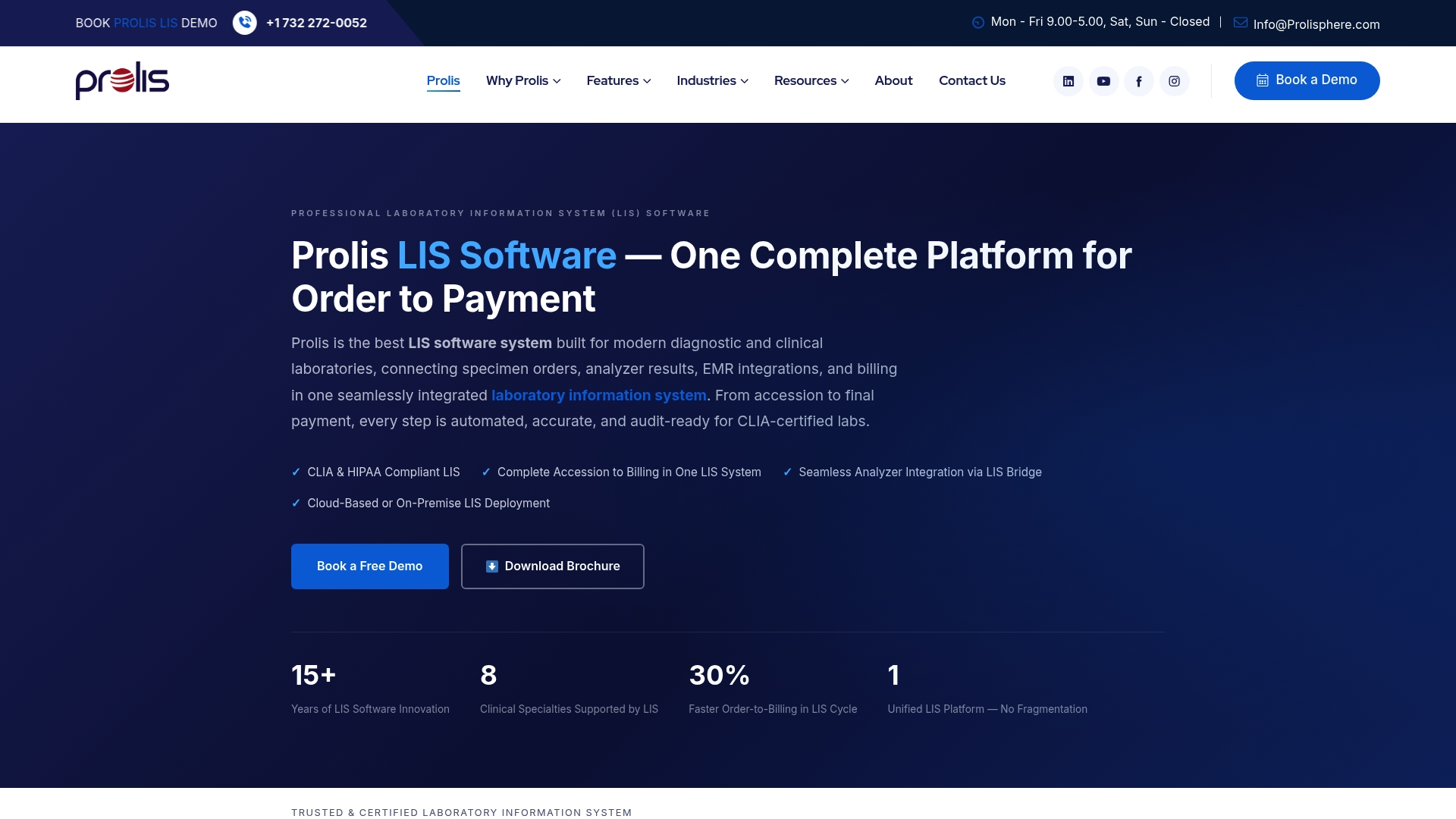
Prolis configures tests at the analyte level, letting a single LIS support chemistry, microbiology, and pathology without module fragmentation. It captures analyzer results in real time and links orders through to bill inside one platform. The vendor states Prolis is certified for CLIA and HIPAA compliance.
Core Features
Workflow automation moves specimens from accession to claims, while real time result capture auto uploads from analyzers. Reporting is audit ready and configurable at the analyte level with QC tracking for regulatory records. The platform offers integrated billing and claims posting plus bidirectional HL7 and FHIR interfaces for EMR and analyzer connectivity.
Key Differentiator
Configuring tests at the analyte level is the core differentiator. That design lets labs define results, reference ranges, and interpretation rules per analyte instead of buying specialty modules.
Pros
Prolis groups accessioning, analyzer interfaces, reporting, and revenue cycle tasks into one unified system, which reduces handoffs across teams. Flexible cloud or on premise deployment gives labs control over hosting and support options. Prolis Bridge connects analyzers, EMRs, billing clearinghouses, and state reporting into a single integration hub. The analyte level setup avoids module fragmentation and simplifies cross specialty testing.
Cons
- Implementation time can vary, and some users report a learning curve during transition.
- Evaluate integration complexity against your existing EMR, instruments, and billing partners before committing.
- Smaller or solo labs may find the feature set excessive. The platform is better suited for mid to large labs and multi site operations.
When It May Not Fit
If your lab runs low volume testing or you operate a single bench with minimal integrations, Prolis may be more than you need. Implementation timelines vary with integration complexity and require dedicated IT and project management bandwidth. Budget planners should factor setup time and staff training into the total cost of ownership.
Notable Integrations
It supports HL7, FHIR, EMR and EHR systems, lab analyzers, and billing clearinghouses. Bidirectional interfaces enable order and result exchange.
Who It's For
Lab owners, managers, and directors running diagnostic, reference, or specialty laboratories will get the most value. Organizations that need integrated billing and multi specialty test management will find the analyte level configuration helpful. It also suits lab networks that require centralized configuration and state reporting.
Real World Use Case
A regional reference lab used Prolis to unify chemistry, microbiology, and pathology workflows. Analyzers uploaded results directly and EMR interfaces transmitted orders to the platform. Billing accuracy improved after claims generation and payment posting moved into the LIS.
Pricing
Pricing is not published on the vendor site and is listed as informational only. The product description does not list tiered pricing or a public starting price.
Website: https://prolisphere.com
AminoCloud
At a Glance
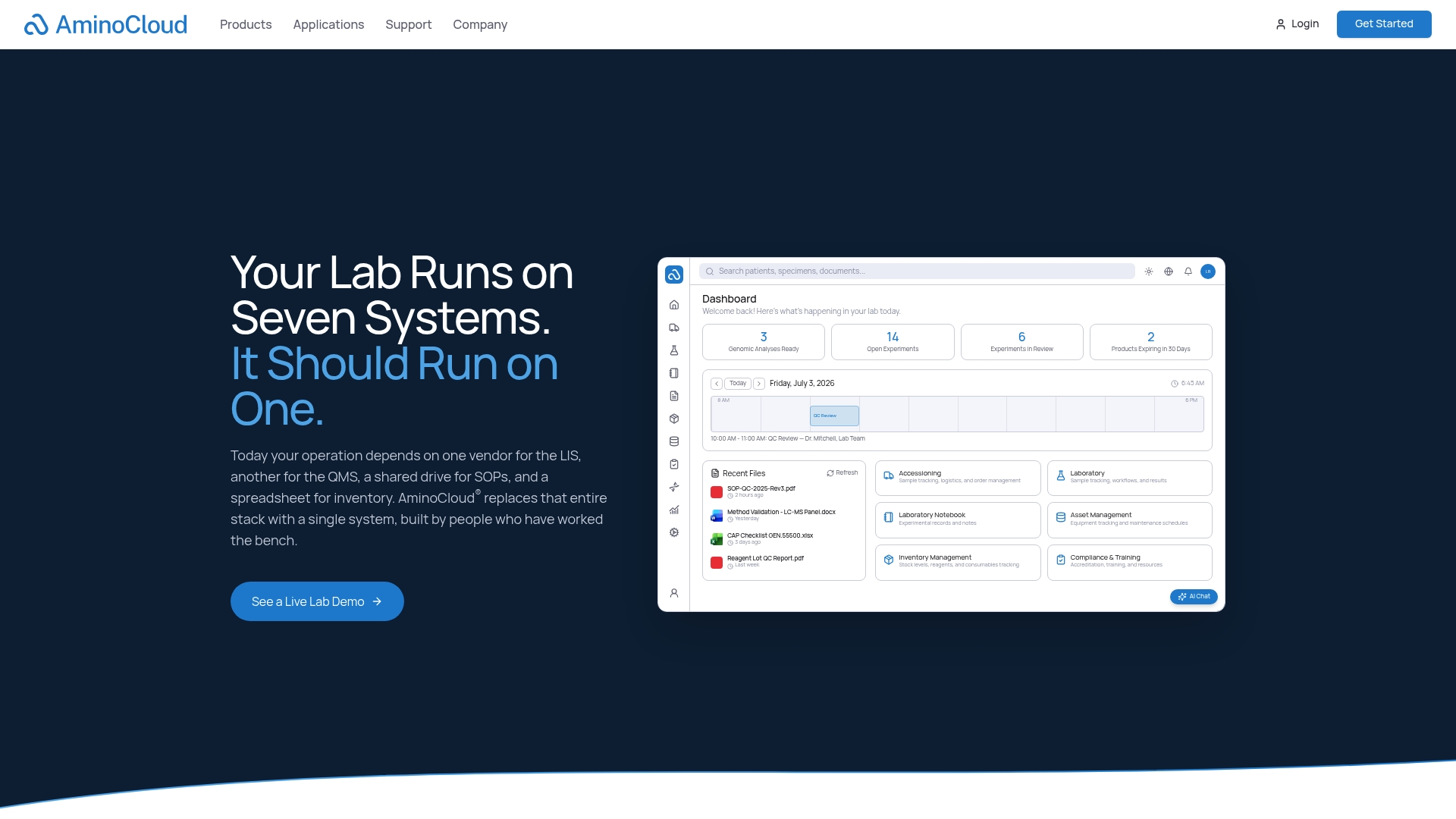
AminoCloud's marketing materials state it runs on Microsoft Azure and is HIPAA, 21 CFR Part 11, and ISO 27001 compliant. That positioning makes it clear the vendor targets regulated labs that must prove data controls and auditability. The platform groups instrument connectivity, EHR protocols, and genomics modules on a single data layer to reduce manual handoffs.
Core Features
AminoCloud centralizes accessioning, sample tracking, inventory, assets, compliance, and documentation in one platform while keeping audit trails in a unified data layer. The product offers dedicated modules such as Strathos for asset and process management, Meridian LIS for clinical data workflows, and Scalor Genomics for NGS pipelines, plus the Helix AI assistant for task support. Role based access, single sign on, and encrypted cloud hosting are built into its architecture.
Key Differentiator
AminoCloud was developed by lab scientists and packages lab specific modules with built in compliance controls and native instrument and EHR connectivity. That focus places laboratory workflows and regulatory requirements at the center of the design rather than bolting compliance onto a generic system.
Pros
Designed by practitioners, AminoCloud aligns data models to typical lab processes so configuration maps to real lab tasks. The modular approach lets a lab add modules as needs change, keeping a single data foundation and audit trail across modules. Strong security and compliance controls plus native instrument and EHR interfaces reduce the number of third party adapters you must manage.
Cons
- Complex system with a learning curve for new users; training is likely needed for lab staff.
- Implementation often requires close collaboration with vendor support to achieve full instrument and EHR integration.
- Pricing details are not published on the website, which suggests enterprise level contracts and negotiated quotes.
When It May Not Fit
Small labs or startups with minimal IT resources may find AminoCloud more than they need. Organizations seeking transparent, self service pricing could find the vendor model restrictive. Teams that require a lightweight LIMS without deep instrument or EHR connectivity should consider simpler alternatives.
Notable Integrations
- HL7 and FHIR protocols
- Epic EHR and Cerner (Oracle) EHR
- Illumina sequencers and Thermo Fisher analyzers
- Roche and Beckman clinical analyzers, Siemens and Sysmex analyzers
- UPS and FedEx shipping APIs, DocuSign for e signatures, Microsoft 365, Azure cloud hosting
Who It's For
Medium to large molecular, clinical, and genomics laboratories that need an integrated lab management platform with compliance controls. Labs that operate regulated tests and must keep audit logs, reagent lot tracking, and instrument interfacing will benefit most. Teams planning multi module rollouts and custom API work match this product profile.
Real World Use Case
A molecular diagnostics laboratory uses AminoCloud to connect NGS instruments, capture reagent lot and QC records, and automate CAP and 21 CFR Part 11 documentation workflows. The lab runs end to end NGS pipelines inside the Scalor Genomics module while reviewers access the same audit trail in Meridian LIS. That setup reduces manual record keeping and centralizes compliance evidence for inspections.
Pricing
Not specified on the public site. AminoCloud requests contact for enterprise quotes and implementation estimates, with pricing likely tied to module selection and integration scope.
Website: https://aminocloud.com
CloudLIMS
At a Glance
CloudLIMS reports ISO 9001:2015 and SOC 2 Type II certification. The platform runs as a cloud-based LIMS that targets biobanks, clinical diagnostics, research, and analytical testing labs. Its vendor materials emphasize configurable workflows, instrument connectivity, and a built-in quality management approach for labs with regulatory needs.
Core Features
CloudLIMS delivers end to end sample tracking with heavy workflow configuration so your procedures map to the system. It supports instrument data integration, legacy data migration, and pre-configured report templates for routine assays. The product also includes built in quality management support, patient and client portals, ongoing product upgrades, unlimited technical support, and secure storage with automatic backups.
Key Differentiator
CloudLIMS focuses on industry specific solutions and deep customization that aligns software behavior to laboratory workflows and compliance rules. That focus makes it easier to reflect SOPs inside the LIMS without forcing teams to change their core procedures. The vendor highlights templates and modules tailored to biobanking, clinical diagnostics, and analytical testing as part of that approach.
Pros
CloudLIMS is highly configurable so labs can model accessioning, processing queues, and result review to match existing SOPs. Its advertised security posture, including ISO 9001:2015 and SOC 2 Type II, supports labs that must manage audits and access controls. The vendor also reports extensive support services with training, data migration help, and continuous upgrades, which reduces the internal burden during rollout. The feature set covers sample and inventory management, instrument integration, reporting templates, and a QMS foundation for corrective actions and document control.
Cons
- Some users report the interface can be hard to navigate for new staff, which increases initial training time.
- Certain modules require additional configuration work to reach desired customization, adding implementation cost.
- Pricing varies by usage level and industry segment, which may lead to higher costs for very small labs or early stage startups.
When It May Not Fit
CloudLIMS requires a reliable internet connection for cloud access, so sites with intermittent connectivity will struggle. Initial setup and deep customization may require dedicated vendor support and time, making it less suitable for teams that need a plug and play solution the same week. Labs that want simple out of the box workflows with minimal setup may find the configuration overhead burdensome.
Who It's For
Laboratory managers and operations staff at biobanks, clinical labs, and research facilities that need a scalable, configurable LIMS will find CloudLIMS appropriate. It fits teams that prioritize compliance controls, audit trails, and long term vendor support. Smaller labs with minimal IT resources should weigh the implementation requirements against their timelines.
Real World Use Case
A biobank deployed CloudLIMS to track thousands of tissue samples while maintaining chain of custody and controlled access. They used legacy data migration services to import historical records and then mapped storage locations and freeze thaw events to the new workflow. The result was more traceable sample handling and a single system for reporting and compliance documentation.
Pricing
CloudLIMS uses tiered pricing based on user counts and industry segments. The company publishes detailed tiers and customization pricing on its website, and labs should request a quote for volume based or module specific costs.
Website: https://cloudlims.com
LabVantage LIMS
At a Glance
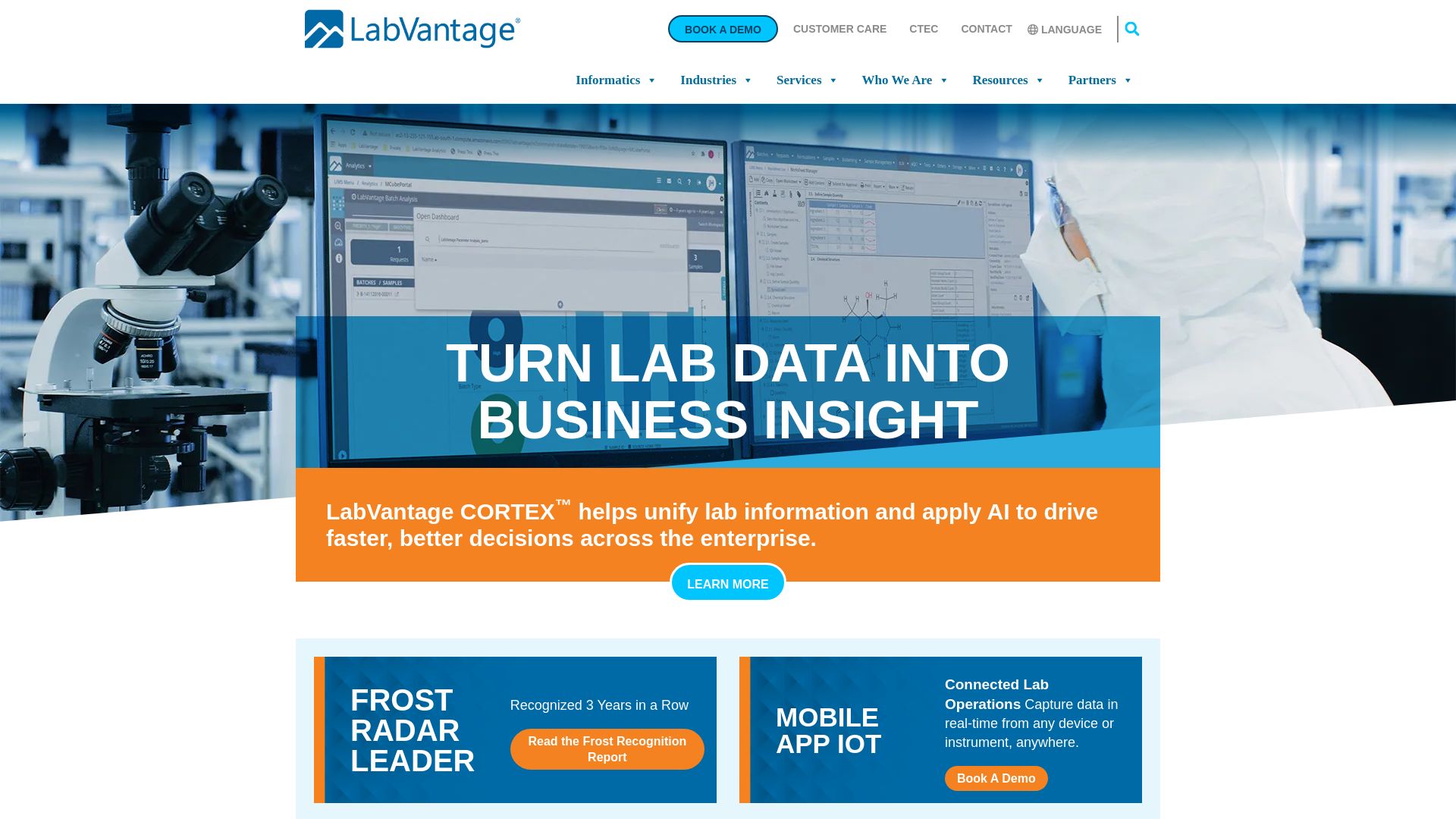
LabVantage reports Frost Radar Leader recognition for three consecutive years. The platform combines laboratory information management with electronic lab notebook and lab execution system modules. It offers industry tailored, preconfigured solutions and AI driven analytics aimed at research, quality, and manufacturing labs.
Core Features
LabVantage delivers an end to end informatics stack that includes ELN, LES, LIMS, SDMS, and analytics in one product. The system supports real time data capture from instruments and mobile devices and offers industry specific packages to shorten deployment. LabVantage also includes an AI offering called LabVantage Cortex and a Lab in the Loop capability for experiment feedback and pattern detection.
Key Differentiator
The vendor emphasizes industry specific preconfigured solutions paired with AI driven insights as its primary advantage. That combination targets labs that want templates and workflows built for pharma, biotech, diagnostics, food, or government labs. The preconfigured content reduces initial workflow design work for common lab scenarios.
Pros
LabVantage groups multiple lab functions inside a single product so you do not need separate point tools for ELN, LIMS, and document management. Industry specific configurations speed up initial setup for regulated and production oriented labs. The analytics and AI components provide self service reports and machine assisted observations that support quality and discovery teams. Flexible deployment options let organizations choose SaaS or on premises models to match IT policies and data governance.
Cons
- The system has high complexity which can require extensive training and dedicated support staff.
- Implementation often needs significant configuration and time from IT and lab informatics teams.
- Some buyers report a steep initial learning curve and user interface complexity during early use.
When It May Not Fit
Small clinical or research labs with limited IT resources may find the platform too large for their needs. Projects with urgent go live targets could struggle because implementations can demand customization and time. Labs seeking a lightweight lab notebook or a single function instrument interface will pay for features they do not use.
Who It's For
Large research, quality, or manufacturing laboratories in pharmaceuticals, biotech, diagnostics, food, and government agencies. Teams that require validated workflows, vendor supported industry templates, and options for SaaS or on premises deployment will gain the most. Organizations planning long term, cross functional informatics consolidation will find the product aligns with that strategy.
Real World Use Case
A biopharma site used LabVantage to replace paper logs and separate document systems across multiple labs. They moved sample logging, method records, and instrument capture into one database. The AI driven analytics helped the R and D team flag assay variance that prompted a follow up investigation.
Pricing
Pricing is not specified on the vendor site. Contact the vendor for a custom quote and licensing options based on modules, user seats, and deployment preference.
Website: https://labvantage.com
Comparison of alternatives
<scratchpad>Competitor eligibility:
- Excluded products (discontinued / inaccessible / under construction): none
- Usable competitors remaining: Prolis LIS Software, AminoCloud, CloudLIMS, LabVantage LIMS
Intro pre-write:
- Does labrynix.com clearly outpace every usable competitor on a single dimension? YES
- If YES: dimension where labrynix.com wins — specialized AI automation for PGx and genetic labs
- First sentence draft: Labrynix.com stands apart through its lab-specific AI capabilities, enabling genetic and PGx laboratories to automate specialized workflows effectively.
Competitor win pre-write:
- Which competitor wins which dimension: AminoCloud wins compliance support because of intrinsic safeguards developed for regulated molecular settings
- Does this dimension matter to the primary reader? YES
Best Fit uniqueness check:
- List each bullet scenario in one clause: genetic lab seeking tailored AI automation / large regulated facility prioritizing compliance features / diagnostic lab aiming for analyte-level configuration / smaller team favoring rapid onsite deployment
- Can any two be swapped without changing meaning? NO
Our Pick pre-write:
- The ONE capability unique to labrynix.com in this set: Lab-trained AI for SOP-based automation and tailored report drafting
- Evidence from the reviews: "Built-in AI agents convert SOPs, interpretation rules, and algorithm logic into automations and draft reports that follow your lab’s governance."
- Closing sentence draft: Labrynix.com’s ability to implement tailored SOP configurations via lab-focused AI makes it stand out, particularly for PGx labs requiring efficiency in report workflows.
- Substitution test: Labrynix.com replaced by AminoCloud: "AminoCloud’s ability to implement tailored SOP configurations makes it stand out, particularly for PGx labs requiring efficiency in report workflows."
- Does the substituted version still work as a recommendation? NO
- If YES: rewritten closing sentence: Not applicable
Final Markdown Analysis:
Comparison of alternatives
Labrynix.com provides advanced AI-driven solutions for genetic and pharmacogenomics laboratories, allowing teams to efficiently streamline operations. This section evaluates how it compares to competitors based on automation, compliance, and scalability options.
Automation for Laboratory Workflows
Labrynix.com incorporates lab-trained AI to automate SOPs, a unique approach that significantly reduces manual effort spent on report generation and workflow setup. In comparison, Prolis LIS Software offers analyte-focused configuration which is effective for cross-specialty testing but does not match Labrynix.com on customized AI-driven automation.
Compliance Support
AminoCloud excels in regulatory safeguards, incorporating systems designed specifically for adherence to 21 CFR Part 11 and HIPAA requirements. This focus takes a more approach toward compliance than Labrynix.com’s general lab-specific automation. Laboratories dealing with strict regulatory audits may prefer AminoCloud for its embedded controls.
Best fit
- Genetic labs needing specialized AI automation to reduce repetitive processes should select Labrynix.com for efficient workflows.
- Regulated molecular labs prioritizing high compliance standards and integrated safety controls will benefit from AminoCloud’s embedded regulatory features.
- Diagnostic labs requiring analyte-level test configuration across multi-specialty environments should investigate Prolis LIS Software for flexible design.
- Smaller analytical-focused teams favoring rapid cloud-based deployment with extensive support considerations should opt for CloudLIMS.
Our pick
Labrynix.com’s lab-specific AI automation positions it as an ideal tool for genetic and PGx testing workflows, especially for labs requiring efficient and precise report generation. Its modularity and tailored options make it versatile, though labs with lesser IT infrastructure or primarily regulatory needs may consider AminoCloud instead.
Choosing the right laboratory information management system depends on tailored functionalities, scalability, and compliance support to meet the specific needs of your laboratory.
| Product | Key Differentiator | Best For | Pricing | Notable Limitation |
|---|---|---|---|---|
| Labrynix | AI-trained automation for personalized workflows | Genetic, PGx labs seeking a central integrated LIMS solution | Price not published | Customizable features may complicate initial cost estimation |
| Prolis | Analyte-level configuration for comprehensive testing | Multi-specialty, mid-to-large size labs with integration needs | Price not published | Complex set up and high requirements for IT and staff resources |
| AminoCloud | Modular compliance-focused with strong security measures | Regulated molecular and genomics labs requiring audit readiness | Price not published | More suited for large or technically capable organizations |
| CloudLIMS | Customizable workflows aligned with lab-specific SOPs | Biobanks and clinical diagnostics labs needing high compliance | Tiered pricing model | Demanding initial setup and requires reliable internet access |
| LabVantage LIMS | Preconfigured solutions for validated workflows | Large research or manufacturing labs in biopharma and diagnostics | Price not published | High complexity demands training and extended implementation |
What Challenges Do Labs Face When Choosing Labworks.com Alternatives?
Genetic, pharmacogenomics, and molecular diagnostic labs often struggle with disconnected tools for LIMS, reporting, portals, and billing. Labrynix addresses these pain points by combining these functions into one platform designed specifically for modern molecular labs. It uses lab-trained AI to generate custom workflows and draft PGx reports that follow your clinical rules, cutting down manual work and ensuring clinical control.
Labrynix also supports secure provider and patient portals plus key integrations like HL7 and FHIR to fit your existing healthcare systems. This unified setup helps labs reduce errors, improve billing visibility, and enhance workflow transparency.
Learn how Labrynix unifies genetic and molecular lab operations.
See how Labrynix can simplify your lab’s operations. Visit Labrynix to get tailored details on how its AI-assisted workflows and reporting tools support efficient genetic testing labs.
FAQ
How does Labrynix support clinical review and audit activities?
Labrynix centralizes clinical review and audit activities through its unified platform. By reducing manual handoffs, Labrynix allows for better oversight and streamlined processes in genetic and PGx labs. This capability enables teams to manage workflows more effectively and enhance their operational efficiency.
What is the difference between Labrynix and Prolis LIS software?
Prolis LIS supports configuring tests at the analyte level, allowing labs to define results and interpretation rules per analyte without needing specialty modules. Labrynix, on the other hand, focuses on lab-trained AI to create tailored workflows and automation that reflect specific laboratory rules. Choose Prolis for highly specialized test management, while Labrynix excels in combining LIMS and reporting into a single system.
Which platform offers superior compliance and regulatory readiness features?
Labrynix emphasizes compliance with HIPAA, SOC 2, and ISO 27001 standards, providing role-based access and secure report delivery. This robust compliance framework supports regulatory readiness for labs needing to adhere to strict guidelines. Expect Labrynix to be a great option for labs prioritizing regulatory compliance and data security.
Can I use Labrynix for modular deployment if I run a smaller lab?
Yes, Labrynix offers modular deployment, allowing smaller labs to start with essential features like reporting or LIMS and expand over time. This flexibility enables labs with limited resources to adopt a tailored approach while still benefiting from advanced functionalities. However, consider evaluating your long-term needs as you may need additional modules later.
Does Labrynix support HL7 and FHIR connectivity for electronic health records?
Labrynix supports HL7 and FHIR connectivity, enhancing its capability to integrate seamlessly with electronic health record systems. This feature allows for improved communication and data sharing between labs and healthcare providers. Expect Labrynix to help streamline your lab's integration efforts with other systems.